

If you’re trying to sign up for Telegram without tying the account to your everyday mobile number, this is the route people usually mean when they say “no-SIM Telegram signup.” It’s not magic, exactly. You’re still using a number-based identity inside Telegram. But you’re not using a physical SIM card, and you’re not handing over your personal number either.
Telegram introduced this option through what it calls No‑SIM Signup. The setup uses blockchain-powered anonymous numbers available through Fragment, and those numbers are designed specifically for Telegram accounts rather than normal calling or texting. So yes, it’s a real method. It’s also a bit more niche, a bit more technical, and honestly not the right fit for everyone.
If you haven’t read the broader guide yet, start with telegram without phone number: what actually works. That pillar article compares this route with virtual numbers, second SIMs, and basic privacy settings, which helps if you’re still deciding whether Fragment is worth the trouble.
What is No-SIM Telegram signup?
No-SIM Telegram signup is Telegram’s official way to let users create or use an account without a physical SIM card. Telegram announced that users can have an account without a SIM card and log in using anonymous numbers available on Fragment. Those anonymous numbers function as account identifiers inside Telegram, not as regular mobile lines for everyday phone use.
That distinction matters more than it sounds. A lot of articles blur the line and make it seem like you’re getting a normal phone number with some extra privacy attached. That’s not really the point here. You’re getting a Telegram-compatible anonymous number, usually in the +888 range, that exists to support Telegram identity and login.
If your actual goal is simply to stop strangers from seeing your number, not necessarily to go full No-SIM, you may be better off with how to hide your phone number on Telegram. For many people, that solves the problem with less cost and less friction.
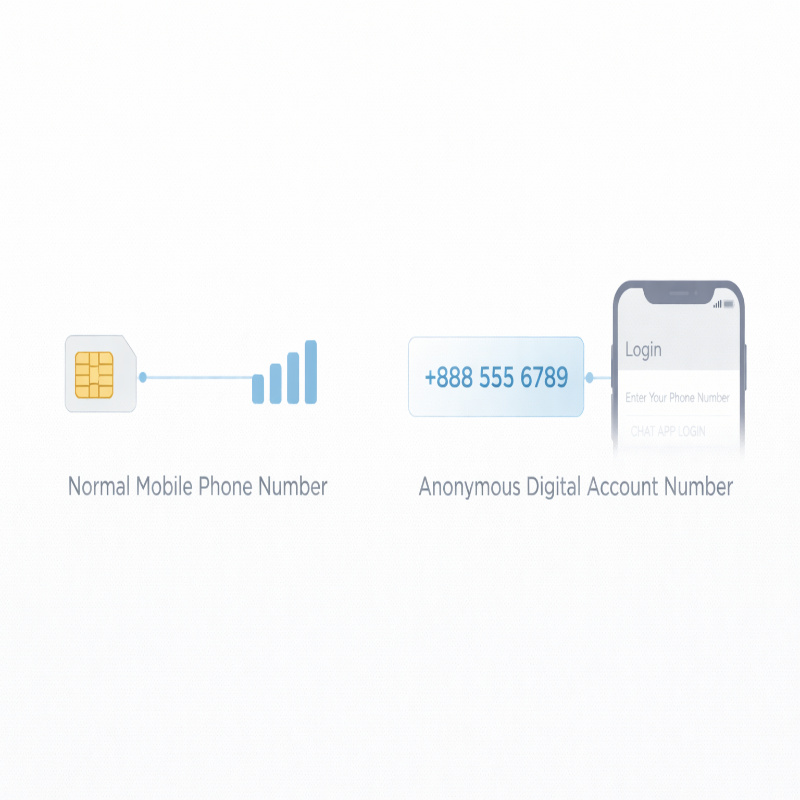
How Fragment anonymous numbers work
Fragment is the marketplace tied to Telegram’s anonymous-number system. Telegram’s own announcement says the platform provides blockchain-powered anonymous numbers for No‑SIM login, and third-party coverage has consistently described the numbers as purchasable identities used for Telegram sign-up and verification rather than traditional telecom service.
In plain language, here’s what happens: you obtain an anonymous number through Fragment, then use that number when Telegram asks for a phone number during sign-up or number change. Telegram then sends the login or verification code through the Fragment-linked flow rather than through a normal carrier SIM.
It sounds futuristic, maybe more futuristic than necessary, but the logic is straightforward enough once you strip the buzzwords away. You’re substituting a Telegram-native anonymous identity for a carrier-issued phone number.
No-SIM Telegram signup is still number-based
This is the first misunderstanding to clear up. No-SIM signup does not mean “Telegram with no number at all.” It means no physical SIM card is required because the number itself comes from Fragment and is meant for Telegram use.
That may feel like a technical distinction, but it changes expectations. If someone is looking for a free workaround or a trick to bypass Telegram verification entirely, this isn’t that. If someone wants a more privacy-separated identity inside Telegram, it’s much closer.
These numbers are for Telegram, not normal calls
Another thing worth saying plainly: Fragment anonymous numbers are not ordinary phone numbers for calls and texts in the usual carrier sense. Coverage around Telegram’s launch of the feature has repeatedly noted that these anonymous numbers are compatible with Telegram sign-up and login rather than general telecom use.
That’s why this setup makes the most sense for people who care specifically about Telegram privacy, account separation, or public-facing identity management. If you need a second number for banks, delivery apps, and random one-time codes across dozens of services, this may not be the best tool.
Who should actually use this method?
I think this is where the advice gets more useful. Because technically interesting and practically right are not always the same thing.
No-SIM Telegram signup via Fragment makes the most sense for:
- Creators who run channels or communities and don’t want a personal number tied to that public presence.
- Privacy-conscious users who want more separation between their real-world mobile identity and their Telegram account.
- Remote workers, freelancers, and moderators who use Telegram professionally and would rather not expose a personal line.
- People who want an official Telegram-supported method instead of relying on fragile public SMS inboxes.
It may be a poor fit for:
- Anyone looking for a free solution.
- Users who dislike dealing with wallets, tokens, or marketplace-style purchases.
- People who just want to hide their phone number from contacts and group members, because regular privacy settings may already be enough.
- Users who want a universal second number for non-Telegram services.
If your main priority is convenience, you may want to compare this with virtual numbers for Telegram: what works (and what breaks). A paid virtual number can feel more familiar, even if it comes with its own recovery risks.
Benefits of using Fragment anonymous numbers
The biggest benefit is pretty simple: your Telegram account does not need to start with your personal SIM-based number. That creates a layer of separation that many users want, especially if they participate in large groups, run channels, or talk to people they do not know well.
There are a few other practical upsides too.
Better identity separation
With a Fragment anonymous number, your Telegram identity is less connected to your everyday carrier profile. That can reduce the awkward overlap between personal contacts, work communities, side projects, and public-facing activity.
It’s not total anonymity in some mythical sense, and I’d be careful with that word. But it is cleaner separation, which is usually the more realistic goal.
Less dependence on public SMS workarounds
Free temporary SMS sites are tempting because they seem fast and cheap. They also tend to be unreliable, shared, and hard to trust. Fragment exists as an official Telegram-supported route, which makes it more stable in principle than improvised public verification tricks.
That alone will matter to a lot of users. Not because it’s glamorous, but because boring reliability is underrated.
Useful for public-facing Telegram use
If you’re a channel admin, community manager, project lead, or support contact, a Fragment-based identity can help create some distance between your personal life and your public Telegram role. That’s not just a privacy preference. Sometimes it’s basic boundary setting.
The downsides most guides rush past
This method sounds elegant when summarized in a sentence. In practice, there are tradeoffs, and they should be front and center.
It is not the simplest setup
You are not just installing Telegram and typing in a code from your regular SIM. There is usually a marketplace step, a wallet/payment step, and an ownership step tied to Fragment. If you’re already comfortable in that world, fine. If not, it can feel like a lot for what is, at heart, a messaging app account.
Some people will look at the process and decide a stable secondary number is easier. That’s a perfectly reasonable conclusion.
It costs money
This is not the “cheap workaround” category. Reporting on the feature has long noted that Fragment numbers require purchase, often through TON-based payment flows, and pricing can vary depending on what is available. So while it may be official, it is definitely not frictionless.
That cost can still be worth it if privacy and account separation matter to you. But it should be an intentional choice, not an unpleasant surprise halfway through setup.
The crypto-like infrastructure will bother some users
Even if your only goal is Telegram privacy, you still have to interact with a system that many people associate with blockchain marketplaces and digital asset ownership. Maybe that’s fine. Maybe it feels unnecessarily elaborate. I can honestly see both reactions.
This is one reason the method remains more of a specialist option than a mainstream recommendation.

How to sign up with a Fragment anonymous number
The exact interface can change over time, so don’t expect every button label to remain identical. But the overall flow is fairly consistent.
Step 1: Get an anonymous number from Fragment
Go to Fragment and look for anonymous numbers. Telegram’s own announcement ties No‑SIM sign-up directly to anonymous numbers on Fragment, and multiple reports describe these numbers as the core login credential for this method.
You’ll generally need the appropriate payment setup supported by Fragment. In practice, this often means working within the TON ecosystem or whatever current payment flow the platform supports.
Step 2: Keep a record of ownership and access
This part is easy to underestimate. Once you obtain the number, keep your access credentials, wallet access, and relevant account details organized. If you treat the setup casually and lose access later, the privacy advantage can quickly become an account-recovery problem.
I’d suggest storing your access details with the same seriousness you’d use for a paid subscription or a domain name. Maybe that sounds dramatic, but it’s better than scrambling later.
Step 3: Open Telegram and enter the anonymous number
When signing up for Telegram, enter the anonymous number you obtained from Fragment instead of your normal mobile number. Telegram’s own documentation and outside reporting both describe this as the intended use case for the No‑SIM feature.
At this point, Telegram treats the number as your account identity for the sign-up flow.
Step 4: Retrieve the verification code through the supported flow
Instead of relying on a normal SIM card inbox, the verification process works through the Fragment-linked mechanism for that anonymous number. Some write-ups describe accessing the login code from the Fragment side after purchase and ownership confirmation.
The important thing is to follow the current flow exactly as shown by Telegram and Fragment at the time you sign up, because this is the part most likely to change visually.
Step 5: Finish setup and lock down privacy settings
Once the Telegram account is active, don’t stop there. Set a username, review phone number visibility, and tighten the account’s privacy controls so your setup actually matches your expectations.
This is where the broader pillar guide still matters. No-SIM signup solves one problem, but not all of them. After sign-up, it’s smart to revisit telegram without phone number: what actually works so your privacy choices are consistent across the whole account.

Can you change an existing Telegram account to a Fragment number?
Yes, in many cases that appears to be possible. Reporting and walkthroughs around the feature have described using a newly purchased anonymous number not only for new sign-ups but also for linking or changing the number on an existing Telegram account.
That said, this is one of those cases where you should move carefully. If your current Telegram account matters to you, make sure you fully understand the number-change flow before touching it. It may be wise to review current Telegram guidance and double-check access to both the existing account and the new anonymous number first.
If your concern is less about No-SIM identity and more about who can view your number, again, the easier win may be hiding your phone number on Telegram rather than migrating the number behind the account.
Common problems and what to do about them
There’s a pattern with setup guides: they explain the “happy path” and quietly skip the awkward bits. So let’s talk about the awkward bits.
The process feels too complicated
If you’re halfway through reading about wallets and marketplace purchases and already feel tired, that’s useful information. It probably means this method is not the best fit for you.
In that case, step back and compare alternatives. A second SIM or a stable paid virtual number may give you enough privacy without turning account setup into a mini research project.
You want privacy, but not total separation
This is more common than people admit. A lot of users don’t need a Telegram-native anonymous identity. They just need a way to avoid exposing a personal number to strangers, clients, or large groups.
If that’s you, keep your regular account and tighten visibility settings. It’s a smaller move, but often the smarter one.
You worry about long-term recovery
You should. Recovery planning is not a side note here. Whatever number method you choose, the important question is not just “Can I sign up today?” but “Will I still control this identity six months from now?”
That concern applies to Fragment, virtual numbers, and burner numbers alike, though in different ways. The difference is that Fragment is official to Telegram’s ecosystem, while public SMS hacks usually are not.
Best practices after No-SIM signup
Once your account is live, a few follow-up settings can make the whole setup much stronger.
Set a username immediately
This gives people a way to contact you without needing your number. It also makes the account feel intentionally set up, rather than half-configured and easy to lose track of.
Review phone number visibility
Even though Telegram has long said users control who can see their number and whether others can find them by phone number, it is still worth checking your current privacy settings manually after account creation. Don’t assume the account is configured exactly the way you want out of the box.
Enable two-step verification
This is one of the simplest high-value security moves you can make. Add the extra password layer so your account is not protected only by the number-based login flow.
And yes, I know, extra passwords are annoying. They are also much less annoying than losing access to an important account.
Is No-SIM Telegram signup worth it?
Sometimes yes. Sometimes clearly no. That’s probably the most honest answer.
If you want an official way to create a Telegram account without using your personal SIM-based number, Fragment anonymous numbers are the strongest fit. Telegram explicitly supports the concept, and the privacy separation is real enough to matter.
But if you mainly want to stop other users from seeing or discovering your number, this route may be more complexity than you need. In that case, the better move may be a normal Telegram account plus stronger privacy settings, or a more conventional second number setup.
The point is not to pick the most technical option. It’s to pick the option that solves your actual problem.
Conclusion
No-SIM Telegram signup through Fragment anonymous numbers is Telegram’s official path for using the service without a physical SIM card. It gives privacy-minded users a way to separate their Telegram identity from their personal mobile number, but it comes with more cost and complexity than many casual users expect.
If your goal is strong identity separation and you do not mind the extra setup, this can be a smart choice. If your goal is simply to keep your number out of view, you may get most of the benefit from privacy settings and a more conventional number strategy. Either way, the key is understanding what problem you are actually trying to solve before you commit to the setup.




More Stories
Best Budget Mechanical Keyboards in 2026: What to Buy (and What to Avoid)
Vimeo to MP3 Converter: Best Tools That Actually Work (Free & Online)
How to Combine Videos on iPhone