
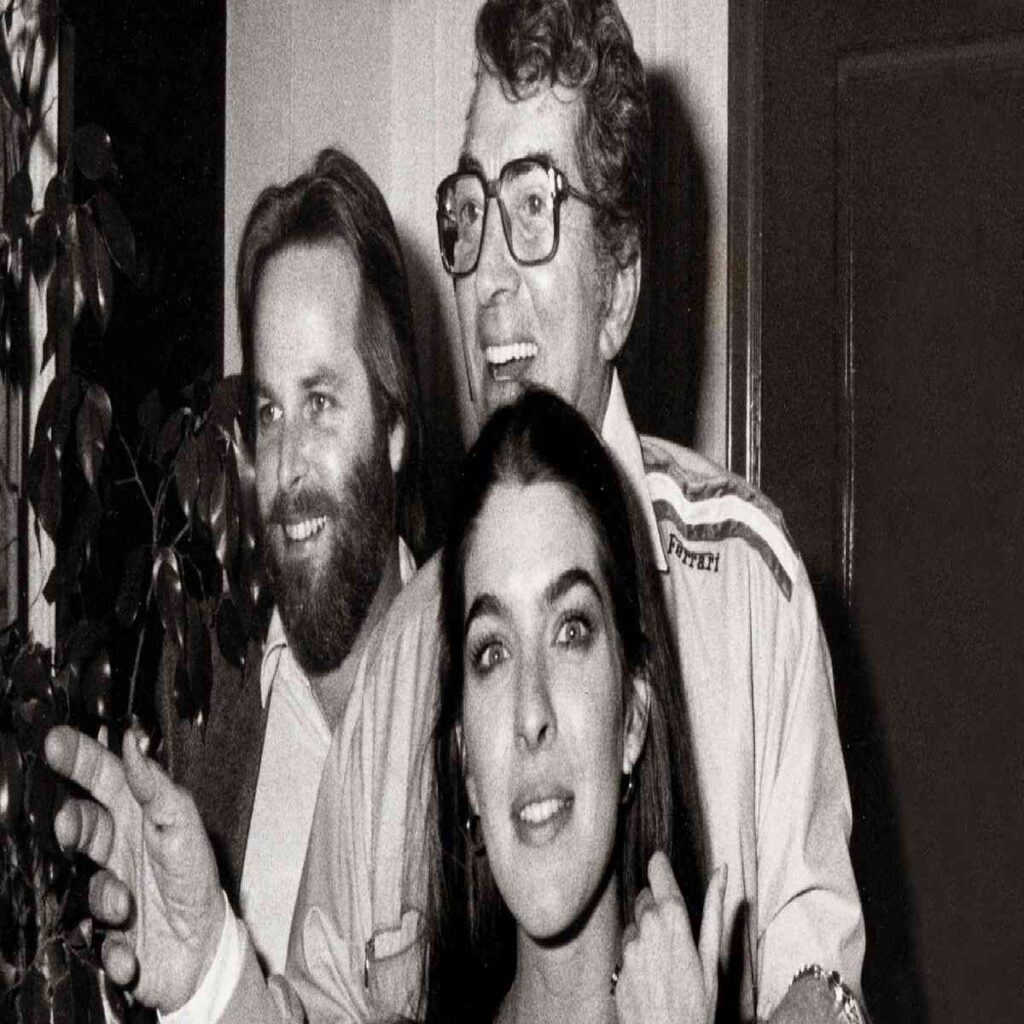
Hollywood has always been fascinating when it comes to famous families. There’s something about the children of legends that captures our attention, perhaps because we wonder if they’ll follow in their parents’ footsteps or carve out entirely different paths. Gina Martin Wilson falls into an interesting category though, one that doesn’t get talked about as much. She’s the daughter of Dean Martin, the legendary crooner and Rat Pack member, and she later married Carl Wilson, a founding member of the Beach Boys. That’s a pretty unique position, I think, connecting two of the most influential musical eras in American history.
Unlike many celebrity children who chase the spotlight or capitalize on their famous last names, Gina Martin Wilson chose something different. She stepped back. She built a private life away from cameras and tabloids, even though she could have easily maintained a high-profile career in entertainment. Her story isn’t filled with scandals or dramatic headlines, which might be exactly why it’s worth exploring. When you look at the children of Dean Martin, Gina’s path stands out for its quietness, its deliberate choice of normalcy over fame.
What makes her story compelling is how she became a living bridge between the smooth sophistication of her father’s Rat Pack era and the innovative harmonies of the Beach Boys’ surf rock revolution. She witnessed both worlds intimately, not as a fan or observer, but as family. That’s a perspective very few people have experienced.
Early Years in the Martin Household
Gina Martin was born on December 20, 1956, in Los Angeles, California. Los Angeles in the 1950s was a different place than it is now, still glamorous but perhaps less cynical about fame and celebrity. She came into the world as the youngest child of Dean Martin and his second wife, Jeanne Martin. Being born into the Martin family meant growing up surrounded by entertainment royalty, but it also meant navigating the complicated dynamics that come with having a famous father.
Dean Martin wasn’t just famous, he was iconic. His career spanned multiple mediums including singing, acting, and comedy. He was part of the legendary Rat Pack alongside Frank Sinatra and Sammy Davis Jr., performing sold-out shows in Las Vegas and making movies that defined an era. For Gina and her siblings, this meant their home life was anything but ordinary. Famous faces would drop by for parties. Their father would be gone for weeks at a time, performing in Vegas or filming on location. It created a childhood that oscillated between normal family dinners and extraordinary celebrity encounters.
Jeanne Martin, Gina’s mother, worked hard to maintain some sense of stability for the children. She understood that despite the glamour and wealth, kids still needed structure and consistency. Perhaps that’s where Gina learned the value of privacy and normalcy. Growing up with Dean Martin’s children meant being part of a large, blended family with siblings from different marriages. The dynamics were complex, as they often are in Hollywood families.
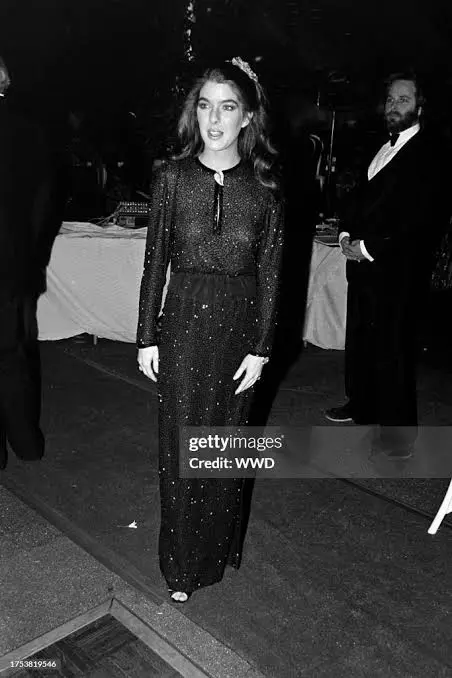
The Martin Family Legacy
Dean Martin’s career had a massive impact on how the family lived. His work schedule was demanding, and the public attention was constant. The Rat Pack era represented a particular kind of American cool, effortless sophistication mixed with genuine talent. But that lifestyle came with costs. Dean was known for his relaxed, almost nonchalant stage persona, but maintaining that image while raising a family created tensions between public perception and private reality.
For Gina, growing up meant being known first as “Dean Martin’s daughter” rather than just Gina. That’s a heavy weight to carry, especially during formative years when you’re trying to figure out who you are as an individual. Some children of famous parents lean into that identity, using it as a springboard for their own careers. Others, like Gina, seem to have felt it more as a burden to be managed carefully.
The Martin household valued togetherness during holidays and special occasions. These were moments when the family could gather away from cameras and fans, creating private memories that belonged to them alone. It’s these moments, I think, that shaped Gina’s later preference for privacy over publicity.
Gina Martin Wilson’s Acting Career
Gina did briefly explore the family business of entertainment. She showed some interest in acting as a teenager, which isn’t surprising given her environment. When you grow up watching your father perform, being on sets, and seeing the creative process up close, it’s natural to be curious about that world.
Appearances on The Dean Martin Show
Her most notable early appearances were on “The Dean Martin Show,” her father’s variety program that ran for years and was hugely popular. These appearances gave audiences a glimpse of the Martin family’s natural chemistry. There was something genuine about seeing Dean interact with his daughter on screen, moments that felt less scripted and more authentically familial.
The show was a platform where Dean could showcase not just his talent but also share his world with viewers. Having Gina appear occasionally humanized him in ways that his smooth stage persona didn’t always allow. For Gina, it was probably an easy entry into performance, working with her father in a relatively safe, controlled environment.
Action Family and Other Projects
In 1987, Gina appeared in a TV series called “Action Family.” The show was a comedy that blended action programming elements with family sitcom tropes, a concept that sounds a bit unusual now but fit the experimental television landscape of the late 1980s. Her performance showed potential, she had a natural presence on screen and the Martin charisma was evident.
But here’s where Gina’s path diverged from what many might have expected. Despite having doors open to her that most aspiring actors could only dream of, she chose not to pursue an extensive acting career. She didn’t appear in numerous projects or build a substantial filmography. Instead, she stepped away, making occasional appearances but avoiding the constant spotlight that comes with a sustained entertainment career.
Why did she make that choice? It’s hard to say definitively without hearing directly from her, which speaks to how successfully she’s maintained her privacy. Perhaps she found that the entertainment industry wasn’t fulfilling in the way she’d hoped. Maybe she valued personal relationships and a private life more than professional achievement in Hollywood. Or it’s possible that watching her father navigate fame’s pressures gave her a realistic understanding of what that life truly entails, and she decided it wasn’t for her.
Love Story with a Beach Boy
Gina’s life took a significant turn when she met Carl Wilson. Carl was one of the founding members of the Beach Boys, the iconic American band that defined the California sound of the 1960s and beyond. He was the youngest Wilson brother in a group that also included his brothers Brian and Dennis, along with their cousin Mike Love and friend Al Jardine.
Meeting Carl Wilson
The exact details of how Gina and Carl met aren’t widely documented, which is consistent with how private their relationship remained. But what’s clear is that when they connected, they found something meaningful in each other. Both came from famous families and understood the unique pressures of living in the public eye. That shared experience probably created a foundation of understanding that’s difficult to find otherwise.
Carl Wilson wasn’t just a Beach Boy, he was integral to the band’s sound. He performed lead vocals on some of their most beloved songs, including “God Only Knows,” which is often cited as one of the greatest songs ever written. His guitar work and vocal harmonies helped define what made the Beach Boys special. When Gina met him, she was encountering someone who, like her father, had left an indelible mark on American music, just in a different style.
Their relationship evolved from friendship to love, bringing together the Martin family’s Hollywood sophistication with the Wilson family’s rock and roll innovation. It was, in many ways, a merging of two entertainment dynasties. You can learn more about Carl Wilson and his contributions to the Beach Boys to understand the musical legacy Gina was joining.
The 1987 Wedding
Gina Martin and Carl Wilson married on November 8, 1987, in Las Vegas. The choice of Vegas feels appropriate given Dean Martin’s deep connections to the city. For decades, Dean had performed there regularly, and Vegas represented a significant part of his career and identity. Having his daughter’s wedding there must have felt like a full-circle moment.
Dean Martin proudly walked Gina down the aisle, a father giving away his youngest daughter. It was a moment that joined the Martin and Wilson families officially, creating connections between Hollywood royalty and rock and roll aristocracy. The guest list probably read like a who’s who of entertainment history, though details remain private, respecting the couple’s wishes for a relatively intimate ceremony despite their famous backgrounds.
The marriage represented more than just two people coming together. It connected two families who had each contributed enormously to American popular culture. The Martins had helped define mid-century entertainment with sophisticated style and effortless cool. The Wilsons had pioneered new sounds in rock music, pushing boundaries and creating something uniquely Californian. Gina and Carl’s union brought these worlds together.
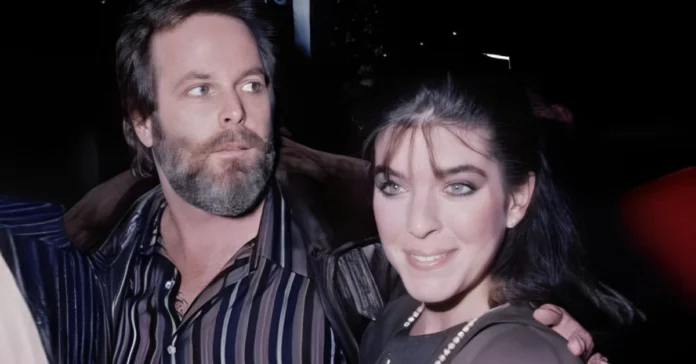
Life as Mrs. Wilson
After their marriage, Gina and Carl built a life together that balanced his continued music career with their desire for relative privacy. Carl remained active with the Beach Boys, touring and recording, while Gina supported him behind the scenes. She traveled with him during tours, becoming a constant presence in his professional life without seeking her own spotlight.
One significant decision they made was not to have children. This choice isn’t uncommon among people in demanding careers, but it often goes unspoken. For Gina and Carl, it seems to have been a mutual decision based on their lifestyle and priorities. Gina accepted what some sources describe as a “childless lifestyle,” focusing instead on their partnership and supporting Carl’s ongoing work with the band.
Their relationship appears to have been characterized by genuine partnership and mutual understanding. Both had experienced the entertainment industry from the inside and understood its demands and pressures. This created a foundation where they could support each other through the unique challenges that come with fame and creative careers. Through their marriage, Gina became connected to the extended Beach Boys family, including Brian Wilson and the next generation of Wilsons who would later form Wilson Phillips.
Carl’s Illness and Death
In the late 1990s, Carl Wilson was diagnosed with lung cancer. The diagnosis came as devastating news, not just for Carl but for the entire Beach Boys family and fans worldwide. Cancer is cruel in how it strips away futures that seemed certain, and for Gina, it meant watching her husband fight a battle that was ultimately unwinnable.
During Carl’s illness, Gina demonstrated the kind of devotion and loyalty that defined their marriage. She stood by his side throughout his treatment, providing support and care during what must have been an incredibly difficult time. Friends and family members have noted her unwavering presence, her commitment to being there for Carl as he faced his mortality.
Carl Wilson died on February 6, 1998, at the age of 51. His death was felt deeply across the music world. He was remembered not just for his musical contributions but for his character, his kindness, and his professionalism. For Gina, his death meant becoming a widow at a relatively young age. She was in her early 40s when she lost her husband, facing the prospect of rebuilding her life without her partner.
The way Gina handled Carl’s illness and death, with quiet dignity and private grief, reflects the approach she’s taken to much of her life. Rather than making her mourning public or seeking sympathy through media attention, she grieved privately, surrounded by family and close friends. This choice honored both Carl’s memory and her own need for privacy during an intensely painful time. The legacy of Carl Wilson’s contributions to music continues to be celebrated, and Gina’s role in his final years remains an important part of that story.
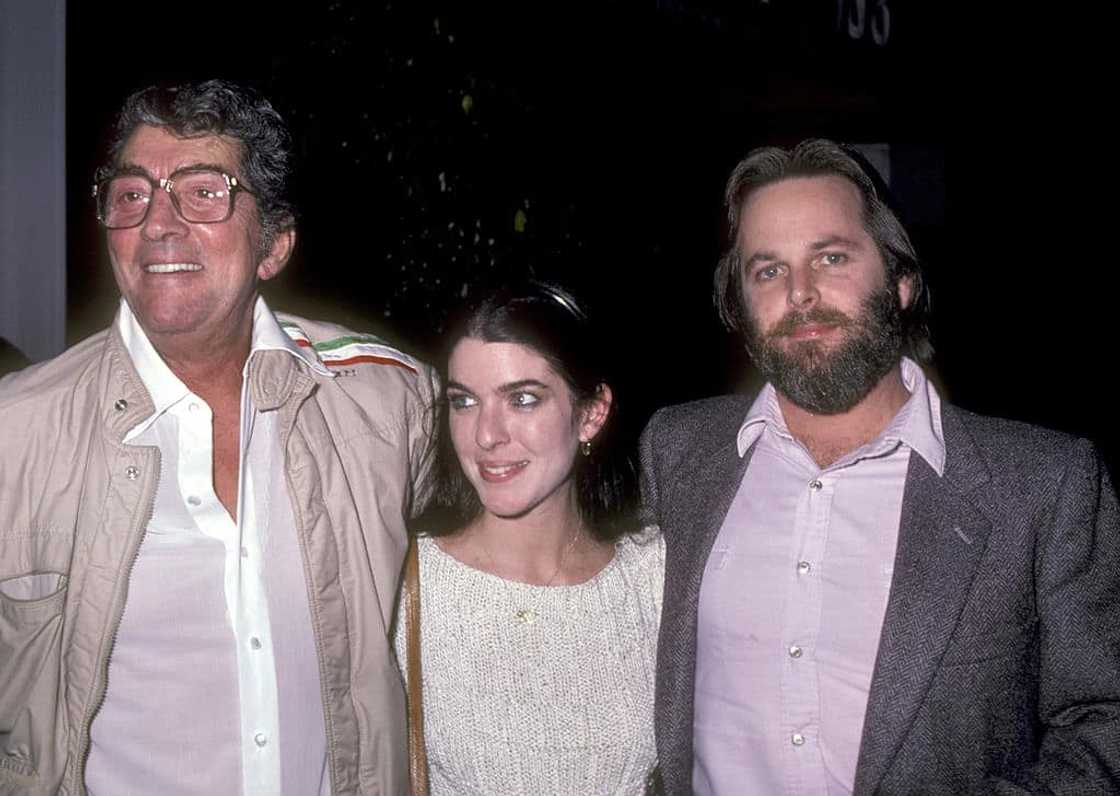
Gina Martin Wilson’s Life Today
After Carl’s death in 1998, Gina faced decisions about how to move forward. She was still relatively young, with potentially decades of life ahead of her. Some widows eventually remarry, finding new partnerships and building different chapters in their lives. Gina, however, chose not to remarry. She seems to have focused instead on healing, on building a quiet life away from public attention, and on honoring the memories of both her father and her husband.
Choosing Privacy Over Publicity
In an era where many people connected to famous families leverage those connections for continued visibility, speaking fees, reality shows, or memoir deals, Gina’s choice to maintain privacy stands out. She could easily have maintained a public profile. As both Dean Martin’s daughter and Carl Wilson’s widow, she possesses unique perspectives on two defining periods in American music history. Publishers would likely be interested in her memoirs. Documentary filmmakers would probably love to interview her extensively.
But she’s consistently chosen privacy instead. Information about her current activities remains limited by design. She doesn’t appear to maintain social media accounts, at least not public ones. She doesn’t give regular interviews. Her rare public appearances are typically at events honoring her father or husband, occasions where her presence makes sense and where she can pay respects without seeking attention for herself.
This approach represents a conscious, deliberate choice. It requires saying no to opportunities that might be financially lucrative or ego-gratifying. It means accepting that many people might not know her story or understand her significance in entertainment history. But it also means living according to personal values that prioritize peace, privacy, and autonomy over publicity and recognition.
Current Lifestyle and Interests
Because Gina has successfully maintained her privacy, specific details about her current lifestyle remain largely unknown. We can make some educated guesses based on her background and the limited information that is public, but these should be understood as possibilities rather than confirmed facts.
Given her family background and marriage, music likely remains important to her. Growing up hearing her father’s smooth vocals and later experiencing her husband’s Beach Boys harmonies, she developed an appreciation for different musical styles and eras. She might attend concerts privately or support musical causes that were important to Carl, though such activities wouldn’t necessarily be publicized.
Family connections probably remain central to her life. The Martin siblings have occasionally gathered for events honoring their father, and Gina likely maintains relationships with her brothers and sisters. She may also have connections with Carl’s children from his previous relationships, though the nature and extent of those relationships aren’t public knowledge.
Her California upbringing might translate to appreciation for the outdoors, health, and the natural beauty that defines Southern California living. The region’s emphasis on wellness and active lifestyles could be part of her routine, though again, this is speculation based on regional culture rather than confirmed information about her specifically.
What’s clear is that whatever Gina’s current interests and activities are, she’s chosen to keep them private. In doing so, she’s carved out space for herself to simply live, rather than performing her life for public consumption. That’s increasingly rare in our current culture of constant sharing and documentation.
Gina Martin Wilson Net Worth and Financial Standing
Financial estimates regarding Gina Martin Wilson’s net worth vary considerably, which isn’t uncommon when someone maintains significant privacy. Different sources report different figures, and without access to actual financial records or statements from Gina herself, these numbers should be understood as estimates rather than definitive facts.
Some sources place her net worth around $100,000, while others suggest it might be closer to $700,000. That’s a significant discrepancy that reflects the challenges of estimating private individuals’ wealth. The lower figure seems surprisingly modest given her background, while the higher figure feels more consistent with potential inheritance from both her marriage and her father’s estate.
Gina’s limited acting career wouldn’t have generated substantial income on its own. Her few appearances on “The Dean Martin Show” and the 1987 “Action Family” series likely provided some earnings, but nothing comparable to sustained, successful acting careers. So her net worth probably derives more from inheritance and careful financial management than from personal entertainment industry earnings.
Dean Martin was successful and presumably left estates for his children, though how those estates were divided among his children from multiple marriages isn’t public information. Similarly, Carl Wilson’s estate from his years with the Beach Boys would likely have provided for Gina as his widow, though the Beach Boys’ financial situation has been complex due to various legal battles and rights issues over the years.
What’s perhaps most interesting about Gina’s financial picture is what it suggests about her values. Her net worth, whether closer to $100,000 or $700,000, is modest compared to many celebrity family members. This suggests someone who hasn’t aggressively commercialized her family connections. She could potentially earn significantly more through appearances, interviews, book deals, or other ventures trading on her famous last names. Her choice not to pursue these opportunities indicates that wealth accumulation isn’t her primary motivation.
This approach to money likely reflects values instilled during her upbringing. Despite Dean Martin’s success, he maintained relatively modest sensibilities compared to some Hollywood contemporaries. He was known more for enjoying life’s pleasures than for ostentatious displays of wealth. That influence may have shaped Gina’s own financial priorities, emphasizing independence and comfort over maximum financial gain.
A Bridge Between Musical Eras
Even though Gina Martin Wilson hasn’t sought fame herself, she occupies a fascinating position in American entertainment history. She stands at the intersection of two defining periods in popular music, connecting the smooth sophistication of the Rat Pack era with the innovative harmonies of the Beach Boys’ surf rock revolution. Very few people have lived at that particular crossroads.
Connecting Rat Pack to Surf Rock
Her father, Dean Martin, helped define what cool meant in mid-century America. His relaxed singing style, his comedic timing, and his ability to make everything look effortless influenced generations of performers. The Rat Pack represented a particular moment when Las Vegas was at its glamorous peak, when tuxedos and cocktails and late-night shows defined sophisticated entertainment. Dean was at the center of that world, and Gina grew up observing it firsthand.
Her husband, Carl Wilson, contributed to something entirely different but equally influential. The Beach Boys created what became known as the California sound, complex harmonies and innovative production techniques that changed what rock music could be. While they started with surf songs, they evolved into much more sophisticated territory, pushing boundaries and expanding the possibilities of popular music. Carl’s guitar work and his lead vocals on songs like “God Only Knows” were integral to that sound.
Gina witnessed both worlds intimately. She didn’t experience them as a music historian or a fan, but as family, as someone present for private moments and personal conversations that shaped how these artists thought about their work. She probably heard her father casually sing standards around the house. She likely listened to Carl work through Beach Boys harmonies in informal settings. These weren’t performances for her, they were simply part of life.
That perspective is essentially unique. The Rat Pack era and the Beach Boys’ surf rock revolution are often studied as separate phenomena, different chapters in American music history. But through Gina’s experience, they connect. She’s a living reminder that these weren’t isolated movements but parts of a broader, continuous evolution in American popular culture. Understanding the Beach Boys family connections helps contextualize how these musical dynasties intersected through Gina.
Alternative Model for Celebrity Children
Perhaps more significantly, Gina Martin Wilson created an alternative model for how celebrity children can live. The typical narrative involves either following in famous parents’ footsteps, attempting to build equivalent careers, or alternatively, struggling with the pressure and falling into dysfunction. Those are the stories that dominate tabloids and entertainment news.
Gina chose neither path. She briefly explored the family business, decided it wasn’t for her, and then simply stepped back. She didn’t loudly reject Hollywood or make dramatic statements about refusing to be defined by her family. She just quietly built a private life, making choices based on personal preferences rather than external expectations or financial incentives.
This quiet dignity has earned respect from those who understand how challenging it is to live adjacent to fame without either embracing it fully or being destroyed by it. While gossip columns focus on more publicity-seeking personalities, on celebrity children who chase attention or crash spectacularly, Gina’s restraint speaks to deeper character. She defined success on her own terms rather than through public recognition or professional achievement in entertainment.
Her path demonstrates that famous connections don’t require constant public exposure. They don’t need to be exploited for personal gain or turned into brands. You can honor your family’s legacy while still maintaining your autonomy and privacy. That’s an increasingly valuable lesson in an era of constant sharing and self-promotion, where privacy itself has become somewhat countercultural.
Connections to Music History
When you think about Gina’s life comprehensively, her connections to music history are pretty remarkable. Her father helped transition popular music from the big band era, which had dominated the 1930s and 1940s, to a more intimate vocal style that influenced countless singers who came after. Dean Martin’s phrasing, his relaxed approach to performance, his ability to connect with audiences through apparent effortlessness, these qualities shaped how American popular singing developed in the latter half of the 20th century.
Meanwhile, her husband pioneered complex harmonies and production techniques that expanded rock music’s possibilities. The Beach Boys weren’t just about surf and cars and girls, though those early songs had their charm. They evolved into sophisticated musicians who experimented with studio techniques, orchestration, and harmonic complexity that influenced everyone from the Beatles to modern indie rock bands. Carl’s contributions to that evolution were substantial and lasting.
Gina witnessed creative collaborations firsthand. Her experiences included family gatherings where music happened naturally, not as performances for audiences but as personal expression. Can you imagine holiday gatherings where Dean Martin might casually sing while Carl Wilson played guitar? Those would be moments where music history happened in living rooms rather than concert halls or recording studios. Those private moments probably revealed aspects of these artists that the public never saw.
Her perspective on music history comes from personal experience rather than academic study. She didn’t learn about the Rat Pack era from books or documentaries, she lived it. She didn’t analyze Beach Boys albums from a musicological perspective, she was part of the family creating them. That gives her a unique authority, an insider’s understanding that’s essentially irreplaceable.
The fact that she hasn’t extensively shared these perspectives publicly makes them even more intriguing. There are probably stories, insights, and personal observations that would fascinate music historians and fans alike. But Gina has chosen to keep those memories private, to preserve them as personal rather than public property. There’s something admirable about that choice, even as it frustrates those of us curious about these figures and their legacies.
Final Thoughts
Gina Martin Wilson’s story offers something valuable in our current cultural moment. In an age obsessed with visibility, where success is often measured by followers, likes, and media mentions, her choice of privacy over publicity feels almost radical. She had every opportunity to build a high-profile career or maintain constant public presence. Her connections alone would have guaranteed attention whenever she wanted it.
But she wanted something else. She wanted to live authentically, on her own terms, without constant performance or documentation. That choice required strength and clarity about what truly matters. It meant prioritizing personal peace over professional achievement measured by conventional standards. It meant accepting that her story might be less known, less celebrated, than it could have been if she’d made different choices.
Her life spans remarkable cultural changes in America. She was born in the 1950s, came of age in the 1970s, married in the 1980s, lost her husband in the 1990s, and has lived through the dramatic technological and social changes of the 21st century. She witnessed the transition from her father’s Rat Pack sophistication through the Beach Boys’ California sound to today’s fragmented digital media landscape. Through all these changes, she maintained consistent values around privacy and authenticity.
The experiences she’s had, growing up as one of Dean Martin’s children and later marrying into Beach Boys royalty, have given her a unique vantage point on American popular culture. She’s seen how entertainment has evolved, how fame has changed, how the relationship between celebrities and public has shifted dramatically. Yet she’s chosen not to commodify that perspective, instead keeping it as something personal and private.
There’s a lesson in that, I think. Not everyone needs to share everything. Not every experience needs to be documented and publicized. Sometimes the most meaningful lives are the ones lived quietly, away from cameras and commentary. Gina Martin Wilson has created her own path, one marked by restraint rather than excess, by privacy rather than publicity, by authenticity rather than performance.
In doing so, she’s written her own story. It’s not the story that Hollywood typically tells about celebrity families, but perhaps that’s exactly what makes it worth remembering. Away from bright lights but rich with meaning, her life demonstrates that there are multiple ways to be successful, multiple definitions of a life well-lived. And sometimes, choosing peace over fame is the most courageous choice of all.




More Stories
Delete Text Messages on iPhone for Both Sides Not Working
Telegram Without Phone Number: What Actually Works
How to delete Text Messages On iPhone for Both Sides