

What Does a Real Estate Developer Actually Do?
In simple terms, a developer identifies an opportunity, assembles the resources (land, capital, team, approvals), executes construction or adaptive reuse, and exits (lease, sell, or hold). That sentence hides a thousand decisions. The job is orchestration: aligning investors, lenders, municipalities, contractors, architects, brokers, and future tenants—while the clock, capital, and community interests tick in different directions.
- Source deals: land, off-market opportunities, distressed assets, public RFPs.
- Underwrite feasibility: rents, comps, cap rates, absorption, hard/soft costs.
- Structure capital: equity, mezzanine, construction debt, tax credits, grants.
- Navigate entitlements: zoning, variances, environmental, community hearings.
- Deliver the asset: design development, GMP contracts, schedules, change orders.
- Stabilize and exit: lease-up strategy, asset management, refinance or sale.
Core Skills You’ll Actually Use
You don’t need to be the best at everything; you do need to be fluent in the following. Think of these as your daily tools—not resume decorations.
- Financial modeling: Discounted cash flows, sensitivity analysis, waterfall structures, lender covenants.
- Market literacy: Read submarkets like locals do—demand drivers, zoning overlays, developer pipelines.
- Capital stack structuring: Blending senior debt, mezz, LP/GP equity, credits, and public subsidies.
- Negotiation: Land purchase terms, JV agreements, GMP conversion, change orders, TI packages.
- Regulatory strategy: Pre-application meetings, community engagement, entitlement timelines.
- Project management: Scope control, value engineering, procurement risk, schedule compression.
- Stakeholder comms: Monthly investor updates, lender draws, public hearings, tenant relationships.
- Risk management: Contingencies, insurance, hedging interest rates and materials volatility.
Education and Background: What Helps (and What Doesn’t)
There is no single correct degree. People enter from finance, brokerage, architecture, engineering, construction management, urban planning—even law. If you like clear lanes and fixed ladders, this isn’t it. If you like building coalitions and solving messy, expensive problems under time pressure, you’ll feel oddly at home.
- Helpful degrees: Finance, business, construction management, architecture, urban planning, law.
- Valuable add-ons: MRED, MBA with real estate focus, LEED, PMP, ARGUS certification.
- Experience to prioritize: Underwriting, entitlements, construction administration, acquisitions.
- What matters most long-term: Track record, capital relationships, execution reliability.
If you want a human-centered lens on privacy and career-building from a real developer’s life, the pillar on Beata Galloway is a steadying read.

Step-by-Step Path Into Development
Not everyone should jump straight into ground-up development. Many shouldn’t. A sustainable path tends to start narrower and get more ambitious as your capital base, team, and pattern-recognition grow.
Phase 1: Build Your Foundation
- Pick a lane adjacent to development: acquisitions analyst, brokerage (land or multifamily), GC project engineer, zoning consultant, or asset management.
- Master a toolset: Excel modeling (hold/sell, IRR, equity multiple), reading drawings/specs, permit workflows, loan term sheets.
- Apprentice under dealmakers: Work where the sponsor signs on the loan. Absorb how decisions happen when real capital is at risk.
Phase 2: Execute “Micro-Dev”
- Small rehabs, single-tenant build-outs, light value-add multifamily, ADUs, or duplex-to-quad conversions.
- Finance with savings + friends-and-family equity; keep leverage conservative and build a no-drama track record.
- Create institutional habits: monthly reporting, cost-to-complete tracking, simple but real risk registers.
Phase 3: Graduate to Entitlement Risk
- Minor variances, lot splits, change-of-use, parking reductions—learn the politics and pacing of approvals.
- Build a standing team: land-use attorney, expeditor, traffic and environmental consultants.
- De-risk with pre-app meetings and early neighborhood outreach; never surprise a community board.
Phase 4: Institutionalize
- Form JVs with experienced GCs and co-GPs; introduce programmatic capital partners.
- Take on mid-scale projects with clear comps and absorbing demand (e.g., 40–150 units, neighborhood retail with signed LOIs).
- Professionalize: development manuals, change-order governance, schedule dashboards, hedging and procurement strategy.
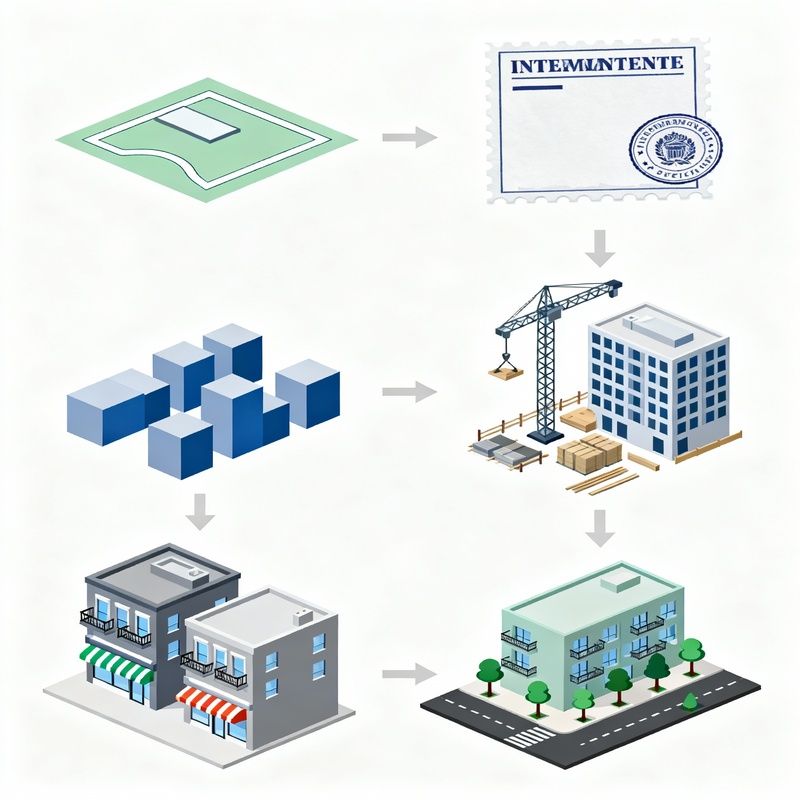
The Development Process: From Dirt to Doorways
1) Deal Sourcing and Site Control
- Find mismatches: underutilized parcels, obsolete buildings, zoning upside, path-of-growth corridors.
- Secure control with assignable PSAs, feasibility contingencies, phased deposits tied to milestones.
- Quick-kill filters: flood zones, utilities capacity, title encumbrances, access/egress constraints.
2) Feasibility and Underwriting
- Base case, upside, and downside—price the pain, not the dream.
- Hard vs. soft costs, contingencies (5–10%+), finance costs, developer fee, and reserves.
- Stress test rent, lease-up pace, cap rate, costs, and carrying duration sensitivity.
3) Capital Stack and Partnerships
- Equity: GP co-invest, LP equity (pref + promote), co-GP for experience or guarantees.
- Debt: Senior construction loan, interest reserves, DSCR covenants, draw mechanics.
- Supplements: Mezz debt, PACE, tax credits (LIHTC, historic), grants, TIF where applicable.
4) Design and Entitlements
- Run parallel tracks: schematic design while entitlements advance; avoid design dead-ends pre-approval.
- Value-engineer early, not after bids—spec smartly, standardize where tenants won’t notice.
- Community engagement isn’t theater—document concerns, show iterations, and keep your commitments.
5) Procurement and Construction
- Choose contract type intentionally: GMP for cost certainty, CM-at-risk for collaboration, lump-sum for simplicity.
- Lock long-lead items; mitigate material volatility with vendor hedging or alternates in spec.
- Weekly OAC cadence: submittals, RFIs, critical path slippage, and contingency burn-down.
6) Lease-Up, Stabilization, and Exit
- Pre-lease anchor tenants where possible; align TI/LC with lease terms and lender conditions.
- Decide hold vs. sell with fresh market reads, realistic cap rate assumptions, and tax planning.
- Asset manage like you still have skin in the game—because you should.
Risk: Where Projects Go Sideways (And How to Plan for It)
Every project has unknowns. Good developers make the unknowns small and survivable. Great ones stack buffers where it counts and say no more often than yes.
- Entitlement risk: Pre-app early; hire local counsel; align scope with political reality.
- Cost inflation: Update budgets quarterly; carry escalation; lock key packages early.
- Schedule drift: Add weather/inspection float; track critical path weekly; enforce milestones.
- Interest rate exposure: Consider hedges or caps; carry conservative debt sizing and reserves.
- Lease-up risk: Validate demand beyond comps—talk to brokers and tenants; avoid single-tenant dependence unless covenant strength is ironclad.
- Contractor risk: Prequal subs; require performance bonds where appropriate; watch work-in-place vs. billings.
Choosing an Asset Class (Without Falling for Fads)
Chasing the “hot” asset class can be a quick way to learn expensive lessons. Fit your market literacy and team to the product.
- Multifamily: Resilient demand; entitlement scrutiny; operational intensity post-delivery.
- Build-to-rent (BTR): Family-friendly demand; distributed sites; standardized product helps scale.
- Industrial: Site scarcity near logistics nodes; simpler specs but fierce competition.
- Neighborhood retail: Experience-driven tenancy; thoughtful parking/circulation; mixed-use synergies.
- Office (selective): Spec risk is high; pursue pre-leasing and flexible floor plates if you proceed at all.
- Adaptive reuse: Character premium; code/MEP unknowns; community goodwill if executed well.
- Affordable/Workforce housing: Complex capital stacks; policy exposure; real impact when done right.
Team: The People You’ll Need Sooner Than You Think
You don’t hire a stadium for a neighborhood game, but even small projects need pros who’ve seen the movie before. Experience pays for itself when things wobble (and they will).
- Land-use attorney, entitlement expeditor, environmental/traffic consultants.
- Architect + civil + structural + MEP engineers (aligned on budget realities).
- General contractor with relevant, recent, local comps.
- Debt broker or lender with similar deal volume; equity partners who understand your niche.
- Leasing brokers who live in your submarket and can name tenants from memory.
- Owner’s rep for complex construction or when your internal bandwidth is thin.
Capital Stack 101 (And the Temptations to Avoid)
The capital that’s easiest to raise is often the most dangerous. Cheap debt with strict covenants can be costlier than conservative debt with flexibility when markets shift. Equity that “just wants to be placed” often wants out faster than your project’s reality will allow.
- Equity: Set clear waterfalls; document governance; insist on decision rights that let you manage risk.
- Debt: Prioritize certainty of closing and draws; don’t underestimate admin load of reporting.
- Reserves: Hard cost, soft cost, interest carry, and operating reserves—cut elsewhere, not here.
- Incentives: Tax abatements, credits, TIF—great tools, but calendar risk is real; parallel-path approvals.
Sustainability and Community: More Than Marketing
ESG can be a buzzword. It can also be a competitive moat. Thoughtful sustainability often reduces OpEx, increases tenant satisfaction, and improves lender terms. Community engagement, when real, reduces friction and increases speed over the life of the project.
- Design for lifecycle costs: envelope, HVAC efficiency, water reuse, durable finishes.
- Pursue certifications when accretive (LEED, BREEAM) but don’t chase plaques over performance.
- Embed local benefits: streetscape, small business tenancy, public realm improvements that outlive the ribbon cutting.
From Single Project to Platform
The first deal proves you can. The next deals prove you can repeat. A platform is repeatability—processes, partners, capital, and product that travel well.
- Create a standardized development manual—checklists, templates, and stage gates.
- Build a data room structure you reuse across deals—investors notice organization.
- Codify vendor frameworks: preferred materials, alternates, and escalation protocols.
- Recruit patient equity that values your niche (and respects your process).
Practical Templates (Use and Adapt)
Preliminary Feasibility Checklist
- Site control: ownership, encumbrances, access, utilities capacity.
- Zoning: by-right potential, variances required, political climate.
- Market: rent comps, vacancy, pipeline, absorption, tenant demand signals.
- Costs: parametric estimate, escalation, contingency, soft costs at realistic rates.
- Capital: indicative term sheets, realistic leverage, interest reserves.
- Schedule: entitlement horizon, construction duration, leasing timeline with float.
- Go/No-Go: three red flags kill it; one yellow flag demands a mitigation plan.
Monthly Lender/Investor Update Outline
- Executive snapshot: budget, schedule, key risks, mitigation status.
- Cost-to-complete and contingency trend.
- Critical path activities and variances.
- Entitlement/inspection milestones achieved and pending.
- Leasing pipeline and conversions (if applicable).
- Photos and three-week look-ahead.
Risk Register Starters
- Entitlement appeal → add schedule buffer; counsel on retainer; stakeholder outreach.
- Structural package delay → pre-release long-lead steel; alternate suppliers priced.
- Interest rate spike → execute rate cap; re-open equity for buffer; re-phase draw schedule.
Career Narratives: Three Realistic Paths
No two journeys look the same, though patterns emerge.
- The Analyst-to-Developer: Starts in acquisitions modeling, graduates to sourcing small deals, then co-GPs mid-scale projects with a trusted GC partner.
- The Builder-Operator: GC project engineer to PM to small spec projects; builds a brand on schedule certainty and cost control before moving into development.
- The Planner-Turned-Sponsor: Urban planning background, masters entitlements and public-private deals, then leads mixed-use or affordable projects with layered capital.
Ethics and Reputation: Your Real Collateral
You’ll borrow money and credibility repeatedly. The latter is harder to replace. Pay vendors on time, deliver bad news early, document changes, and never hide risk from partners. In the long run, reputation tightens spreads more than any pitch deck can.
Getting Started This Quarter: A Simple, Real Plan
- Pick one submarket and become the person who knows every parcel and planned project.
- Underwrite five real deals end-to-end; share one polished model with a mentor for critique.
- Meet three land-use attorneys and ask them where good deals die (then plan around those cliff edges).
- Walk construction sites weekly; learn to read what’s on the ground vs. what’s on the schedule.
- Build your mini data room template now—use it on your first micro-dev within 6–12 months.



More Stories
Best Budget Mechanical Keyboards in 2026: What to Buy (and What to Avoid)
Vimeo to MP3 Converter: Best Tools That Actually Work (Free & Online)
How to Combine Videos on iPhone