

Is Tristan Actually Mentioned in the Bible?
Let’s address the central question directly: No, Tristan does not appear in the Bible. You won’t find it in Genesis or Revelation, the Gospels or the Epistles. No biblical character—major or minor—bears the name Tristan. No place, no tribe, no prophet, no king. It simply isn’t there.
I think it’s important to be upfront about this because, well, a lot of websites dance around the issue or try to manufacture connections that don’t exist. The truth is, Tristan in the Bible is a topic born from curiosity rather than Scripture itself. And that’s actually okay. The search for “Tristan in the Bible” reflects something beautiful—it shows people looking for spiritual meaning in the names they love or are considering for their children.
Now, why do so many people search for “Tristan in the Bible” if it’s not there? A few reasons, perhaps:
- The sound and feel of the name: Tristan has a certain gravitas to it. It sounds ancient, meaningful, almost biblical—even if it isn’t.
- Christian parents seeking guidance: Faithful families often prefer names with biblical or spiritual connections, so researching “Tristan in the Bible” is a natural step in the naming process.
- Confusion with similar names: Names like Tristan, Titus, or even Tristram (an old variant) might create some confusion.
- Cultural associations: The name appears in Christian contexts throughout history, particularly in medieval Europe where Christianity was deeply woven into culture.
But here’s the thing—and I really want to emphasize this—the absence of Tristan in the Bible doesn’t diminish its spiritual value. Think about names like Grace, Faith, Hope, or Sophia (meaning wisdom). These aren’t names of biblical characters either, yet they’ve become beloved choices in Christian families because they represent biblical concepts. Tristan operates similarly, as we’ll discover.
The True Origins of Tristan: Where Does This Name Come From?
If Tristan in the Bible isn’t a thing, where does this name actually originate? The answer takes us on a fascinating journey through Celtic Britain, Latin literature, and medieval romance. Buckle up—this gets interesting.
Celtic and Welsh Roots
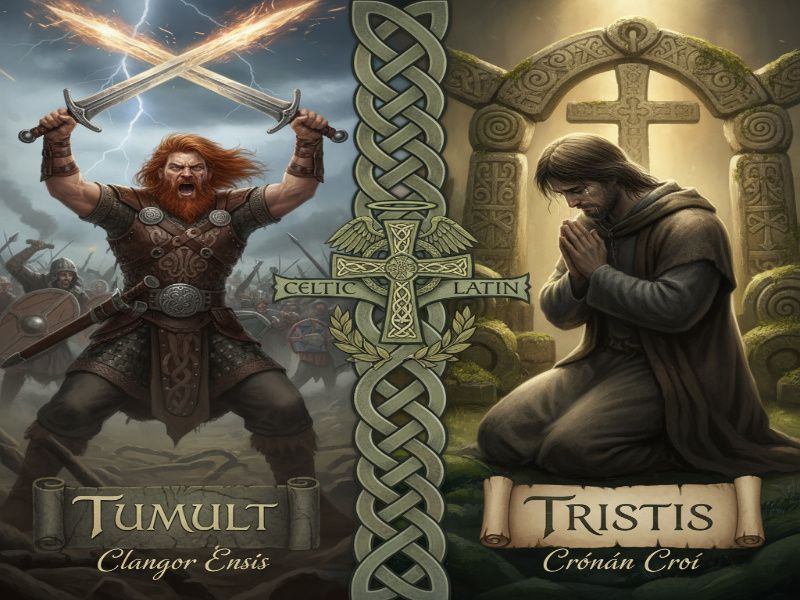
The earliest forms of Tristan appear in Celtic languages, particularly Old Welsh and Pictish. The name shows up as Drystan, Drustan, or Trystan in ancient texts. These variations derive from the word “drust,” which means “noise,” “tumult,” or “din.” Some scholars suggest it might also relate to “clanking swords” or “battle sounds”—images that evoke warriors and conflict.
In ancient Britain, this would have been a name associated with strength and courage. Warriors bore names that reflected their nature or deeds. The “tumult” in Tristan’s Celtic meaning suggests someone who doesn’t back down from challenges, who perhaps even creates a bit of chaos when necessary. There’s a boldness to it.
Archaeological evidence supports the name’s antiquity. The Tristan Stone, a 6th-century granite pillar discovered in Cornwall, bears the Latin inscription “Drustanus hic iacit Cunomori filius” (Here lies Drustan, son of Cunomorus). This proves the name existed in Christian Britain long before the famous medieval legends emerged.
Latin Influence: The Sorrowful Interpretation
As the name traveled through medieval Europe, it became associated with the Latin word “tristis,” meaning “sorrowful,” “sad,” or “mournful.” This connection isn’t etymologically accurate—the name doesn’t actually derive from Latin—but the association stuck, particularly in literature.
The medieval romance of Tristan and Isolde reinforced this sorrowful interpretation. In the German version of the legend, Gottfried von Strassburg explained that Tristan’s mother died giving birth after learning her husband fell in battle. The child was named Tristan to commemorate this double sorrow. Whether this etymology is legitimate or literary invention doesn’t matter much—it became part of how people understood the name.
For our purposes, thinking about Tristan in the Bible context, this Latin connection is actually quite meaningful. Sorrow is deeply biblical. The Psalms overflow with lament. Job’s story centers on suffering. Jesus himself was described as “a man of sorrows, acquainted with deepest grief” (Isaiah 53:3). The sorrowful meaning of Tristan, even if arrived at through linguistic accident, resonates with Scripture’s honest acknowledgment of human pain.
The Legend of Tristan and Isolde
Perhaps the biggest influence on the name’s popularity comes from medieval literature. The tragic romance of Tristan and Isolde became one of the most famous stories in Western culture, rivaling even Romeo and Juliet for cultural impact.
In the legend, Tristan is a knight who falls in love with Isolde (sometimes spelled Iseult), an Irish princess. Through various versions—Celtic, French, German, and English—the story explores themes of loyalty, forbidden love, sacrifice, and tragedy. Tristan typically serves King Mark of Cornwall, and Isolde is Mark’s wife or intended bride, creating an impossible situation.
The legend spread throughout Christian Europe during the 12th and 13th centuries. Richard Wagner later immortalized it in his opera “Tristan und Isolde” (1865), which explored the story’s philosophical and spiritual dimensions. While the legend itself isn’t Christian in origin, Christian authors often layered spiritual themes onto the narrative—redemption, sacrifice, the cost of love.
So when we search for “Tristan in the Bible,” we’re really looking at a name that traveled from Celtic Britain through medieval Christianity into modern usage. It’s a name shaped by multiple cultures and languages, each adding layers of meaning worth exploring in depth.
What Does Tristan Mean Spiritually?
Even though Tristan in the Bible doesn’t exist as a direct reference, the name carries profound spiritual significance when we examine its meanings—both the Celtic “tumult” and the Latin-influenced “sorrow.”
Think about it this way: the Christian life involves both struggle and sorrow. Jesus told his followers, “In this world you will have trouble. But take heart! I have overcome the world” (John 16:33). The name Tristan, with its dual meaning, encapsulates this tension between hardship and hope, between the battles we face and the strength we need to endure them.
The Duality of Tristan’s Meaning
| Aspect | Meaning | Spiritual Connection |
|---|---|---|
| Celtic Origin (Drystan/Drustan) | Tumult, noise, clanking swords | Spiritual warfare, perseverance through conflict, courage in trials |
| Latin Association (Tristis) | Sorrowful, sad, mournful | Honest acknowledgment of suffering, lament, the valley of shadow |
| Combined Meaning | Sorrow transformed through strength | Romans 5:3-4 – suffering produces perseverance, character, and hope |
| Cultural Legacy | Medieval chivalry and sacrifice | Laying down one’s life for others, Christ-like sacrifice |
This dual meaning makes Tristan especially interesting from a spiritual perspective. It’s not just about sadness, and it’s not just about struggle. It’s about moving through hardship with courage and faith. It’s about the transformation that happens when we don’t avoid sorrow but face it, trusting that God is working even in our darkest moments.
Perhaps that’s why so many Christian parents are drawn to this name despite its absence in Scripture. It tells a story that resonates with their faith—the story of redemption through suffering, of hope beyond despair, of strength forged in the fire of trials.
Biblical Themes That Reflect Tristan’s Meaning
While researching “Tristan in the Bible” won’t yield direct results, the name’s meaning connects beautifully with several major biblical themes. Scripture is filled with stories and teachings that mirror the journey from sorrow to strength, from tumult to peace.
Suffering and Transformation
The Bible doesn’t sugarcoat human suffering. It presents it honestly, in all its rawness and pain. Yet Scripture also consistently shows how God uses suffering to transform us, to deepen our faith, and to prepare us for greater purposes.
Job’s Story: Perhaps no biblical figure embodies the sorrowful meaning of Tristan more than Job. He lost everything—his children, his wealth, his health, his social standing. His friends accused him. His wife told him to curse God and die. Yet Job persevered. In his darkest moment, he declared, “The Lord gave and the Lord has taken away; may the name of the Lord be praised” (Job 1:21).
Job’s story isn’t about toxic positivity or denying pain. He questions, he laments, he demands answers from God. But he doesn’t abandon faith. And in the end, God restores him—not just to his former state, but to something greater. The tumult of his suffering became the foundation for deeper wisdom and blessing.
David’s Psalms: King David wrote many psalms during periods of intense distress. Psalm 22 begins with the cry Jesus would later echo on the cross: “My God, my God, why have you forsaken me?” David knew sorrow intimately—betrayed by his son, hunted by his enemies, broken by his own sins.
Yet David’s psalms don’t end in despair. They move through grief toward hope. Psalm 30:5 captures this perfectly: “Weeping may endure for a night, but joy comes in the morning.” This is the spiritual journey Tristan represents—acknowledging the darkness but trusting in the dawn.
Paul’s Trials: The apostle Paul experienced beatings, shipwrecks, imprisonment, rejection, and constant danger. He described having “a thorn in the flesh” that caused him ongoing suffering. Yet Paul wrote, “I consider that our present sufferings are not worth comparing with the glory that will be revealed in us” (Romans 8:18).
Paul didn’t just endure suffering—he found meaning in it. He saw how trials strengthened his faith, proved the power of God, and connected him more deeply to Christ’s own suffering. That’s the transformative power of hardship when faced with faith.
Perseverance Through Hardship
The “tumult” aspect of Tristan’s Celtic meaning connects directly to the biblical virtue of perseverance. Scripture repeatedly emphasizes the importance of standing firm through trials, not giving up when life gets difficult.
James 1:12 promises, “Blessed is the one who perseveres under trial because, having stood the test, that person will receive the crown of life that the Lord has promised to those who love him.” Notice the progression—trial leads to perseverance, which leads to blessing. The struggle isn’t meaningless; it’s part of the journey toward spiritual maturity.
Romans 5:3-4 goes even further: “We also glory in our sufferings, because we know that suffering produces perseverance; perseverance, character; and character, hope.” This isn’t about glorifying pain for its own sake. It’s about recognizing that the tumultuous seasons of life often produce the strongest character and the deepest hope.
When someone named Tristan faces challenges, these verses can serve as powerful reminders. The very meaning of their name points them toward this biblical truth—that the battle isn’t the end of the story, but the middle. The clanking swords, the noise of conflict, the tumult of struggle—these are the sounds of a warrior being forged.
Hope Beyond Sorrow
Christianity is fundamentally a religion of hope. It acknowledges present suffering but always points beyond it to future glory, to restoration, to resurrection. When we think about Tristan in the Bible context, this theme of hope-beyond-sorrow becomes central.
2 Corinthians 4:16-18 offers this perspective: “Therefore we do not lose heart. Though outwardly we are wasting away, yet inwardly we are being renewed day by day. For our light and momentary troubles are achieving for us an eternal glory that far outweighs them all. So we fix our eyes not on what is seen, but on what is unseen, since what is seen is temporary, but what is unseen is eternal.”
Paul calls suffering “light and momentary” not because it isn’t real or painful, but because he’s comparing it to eternal glory. The sorrow we experience now doesn’t define our future. For Christians, the resurrection of Jesus guarantees that death, pain, and sorrow don’t have the final word.
Psalm 126:5-6 paints a beautiful picture: “Those who sow with tears will reap with songs of joy. Those who go out weeping, carrying seed to sow, will return with songs of joy, carrying sheaves with them.” The farmer plants seeds through tears, working through grief and hardship. But harvest comes. Joy returns. The sorrow was real, but it wasn’t permanent.
This is the spiritual message embedded in Tristan—perhaps not intentionally, but meaningfully nonetheless. The name carries both sorrow and strength, both tumult and the courage to face it. And that’s deeply biblical.
Bible Verses for Someone Named Tristan
If you or someone you love bears the name Tristan, or if you’re considering it for a child, these Scripture verses connect beautifully with the name’s meaning and spiritual significance. I’ve selected verses that speak to themes of perseverance, transformation through suffering, and hope beyond sorrow.
Verses About Endurance and Strength
- James 1:2-4 – “Consider it pure joy, my brothers and sisters, whenever you face trials of many kinds, because you know that the testing of your faith produces perseverance. Let perseverance finish its work so that you may be mature and complete, not lacking anything.” This verse acknowledges the trials (the tumult) while pointing toward spiritual growth.
- Isaiah 40:31 – “But those who hope in the Lord will renew their strength. They will soar on wings like eagles; they will run and not grow weary, they will walk and not be faint.” When facing life’s battles, this promise of renewed strength offers hope.
- Philippians 4:13 – “I can do all this through him who gives me strength.” A reminder that our strength ultimately comes not from ourselves but from God’s power working in us.
- Joshua 1:9 – “Have I not commanded you? Be strong and courageous. Do not be afraid; do not be discouraged, for the Lord your God will be with you wherever you go.” The warrior spirit in Tristan’s Celtic meaning finds expression in this call to courage.
Verses About Sorrow and Comfort
- Psalm 34:18 – “The Lord is close to the brokenhearted and saves those who are crushed in spirit.” God doesn’t distance himself from our sorrow—he draws near to it.
- Matthew 5:4 – “Blessed are those who mourn, for they will be comforted.” Jesus’ Beatitudes acknowledge grief while promising divine comfort.
- Psalm 30:11 – “You turned my wailing into dancing; you removed my sackcloth and clothed me with joy.” This verse captures the transformation from mourning to celebration that God brings about.
- 2 Corinthians 1:3-4 – “Praise be to the God and Father of our Lord Jesus Christ, the Father of compassion and the God of all comfort, who comforts us in all our troubles, so that we can comfort those in any trouble with the comfort we ourselves receive from God.” Our sorrows can become the means by which we help others.
Verses About Hope and Future Glory
- Romans 8:18 – “I consider that our present sufferings are not worth comparing with the glory that will be revealed in us.” Perhaps the most powerful verse for someone named Tristan—present suffering doesn’t compare to future glory.
- Jeremiah 29:11 – “For I know the plans I have for you, declares the Lord, plans to prosper you and not to harm you, plans to give you hope and a future.” Even in exile and sorrow, God’s plans include hope.
- Revelation 21:4 – “He will wipe every tear from their eyes. There will be no more death or mourning or crying or pain, for the old order of things has passed away.” The ultimate promise—a day when all sorrow ends.
- Romans 15:13 – “May the God of hope fill you with all joy and peace as you trust in him, so that you may overflow with hope by the power of the Holy Spirit.” Hope isn’t just a feeling—it’s a gift from God that overflows through his Spirit.
Verses About Faith in Difficult Times
- Matthew 17:20 – “If you have faith as small as a mustard seed, you will say to this mountain, ‘Move from here to there,’ and it will move. Nothing will be impossible for you.” Even small faith can overcome seemingly impossible obstacles.
- Hebrews 11:1 – “Now faith is confidence in what we hope for and assurance about what we do not see.” Faith looks beyond present circumstances to God’s promises.
- Proverbs 3:5-6 – “Trust in the Lord with all your heart and lean not on your own understanding; in all your ways submit to him, and he will make your paths straight.” A call to trust God even when the path isn’t clear.
These verses can serve as spiritual anchors for anyone named Tristan, reminding them that their name—though not found in Scripture—points toward deeply biblical truths about the human experience and God’s faithfulness through all seasons of life.
Tristan in Legend vs. Christian Faith
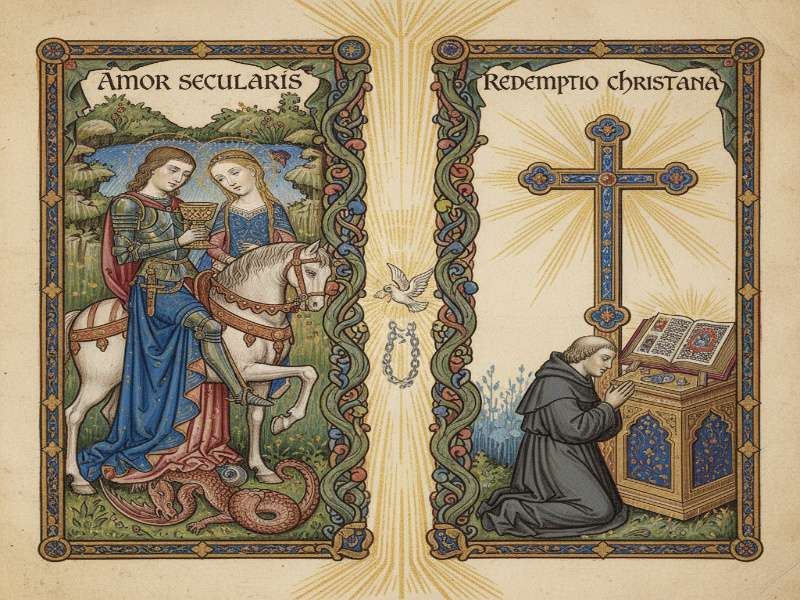
We can’t discuss Tristan without addressing the elephant in the room—the famous medieval legend. The story of Tristan and Isolde has captivated audiences for centuries, but it’s not exactly a model of Christian virtue. The tale centers on adultery, forbidden love, and ultimately ends in tragedy. So how do we reconcile the legendary Tristan with the spiritual significance we’ve been exploring?
The Legend in Brief
In most versions of the story, Tristan is a knight who serves King Mark of Cornwall. He’s sent to Ireland to escort the princess Isolde back to Cornwall to marry King Mark. During the journey, Tristan and Isolde accidentally drink a love potion intended for Isolde and Mark, causing them to fall hopelessly in love with each other. Despite Isolde marrying Mark, she and Tristan carry on an affair, leading to exile, separation, and eventually death for both lovers.
It’s a tragic tale of impossible love, loyalty torn in multiple directions, and the destructive power of passion. The story explores themes that Christianity would certainly view critically—adultery, deception, divided loyalties. Wagner’s opera version emphasizes the lovers’ transcendent passion, suggesting their love exists on a higher plane than mundane morality.
A Christian Perspective on the Legend
Christian interpretation of the legend takes several approaches. Some medieval authors saw it as a cautionary tale about the dangers of unchecked passion and the importance of fidelity to marriage vows. Others focused on the themes of sacrifice and suffering, drawing parallels to Christ’s sacrificial love.
But I think the most important point is this: the legendary character isn’t the name. When Christian parents choose the name Tristan, they’re not endorsing adultery or tragic romance. They’re connecting to the name’s meaning—sorrow, strength, perseverance—not to every detail of medieval literature.
Think about it this way: the name Samson is biblical, but that doesn’t mean Christian parents who choose it approve of visiting prostitutes or committing suicide (both things Samson did). David is one of the most popular biblical names, yet King David committed adultery and murder. We separate the name’s meaning and spiritual significance from the complete moral record of legendary or historical figures who bore it.
Redeeming the Narrative
There’s actually something beautiful in taking a name from pagan legend and infusing it with Christian meaning. It’s a form of redemption, isn’t it? The legend of Tristan and Isolde ends in death and tragedy. But a Christian understanding of the name Tristan points toward resurrection, transformation, and hope beyond sorrow.
The legendary Tristan was trapped by fate, circumstance, and passion. But a believer named Tristan lives in freedom—the freedom Christ provides. The legendary Tristan’s sorrows led to destruction. But for a Christian bearing this name, sorrow can become the pathway to deeper faith and greater joy.
This is what Christianity does—it transforms, redeems, and sanctifies. It takes broken things and makes them whole. It takes sorrowful stories and writes resurrections. So when we search for “Tristan in the Bible,” we’re really asking whether this name can be redeemed for Christian use. And the answer is yes, absolutely.
Is Tristan a Good Christian Name?
This is the practical question many people are really asking when they search for “Tristan in the Bible.” If you’re a Christian parent choosing a name for your child, or if you’re considering changing your name, you want to know: Is this appropriate? Is this honoring to God?
The answer requires us to think about what makes a name “Christian” in the first place. If you want a much more detailed exploration of this question, I’d recommend reading our comprehensive guide on whether Tristan is a good Christian name. But let me offer some thoughts here.
What Makes a Name “Christian”?
Is a Christian name one that appears in the Bible? If so, we’d need to eliminate names like Grace, Faith, Hope, Trinity, Serenity, and countless others that Christian families love. These names represent biblical concepts or theological truths, but they’re not names of biblical characters.
Is a Christian name one that has been used by believers throughout history? By that standard, Tristan qualifies. The name appears throughout Christian Europe’s history, borne by monks, knights, and ordinary believers. The Tristan Stone in Cornwall dates to the 6th century, when Britain was thoroughly Christian.
Is a Christian name one that reflects Christian values or biblical themes? Then Tristan definitely qualifies. As we’ve explored throughout this article, the name’s meanings—sorrow transformed through strength, perseverance through tumult—align beautifully with Scripture’s teachings.
I think perhaps the best definition is this: A Christian name is one that a believer chooses with intentionality, infusing it with spiritual meaning and raising the child (or living) in a way that honors God. It’s less about the name itself and more about the life lived under that name.
Precedent in Christian History
Throughout Christian history, believers have chosen names from various sources—biblical characters, saints, virtues, cultural traditions, and yes, even legends and literature. What matters isn’t the source but the meaning attached to it.
Consider names like:
- Sophia – Not a biblical character, but represents wisdom (a biblical concept)
- Christopher – Means “Christ-bearer,” but comes from legend, not Scripture
- Patrick – The name of Ireland’s patron saint, but not biblical
- Arthur – From pagan British legend, yet used by countless Christians
- Diana – Actually the name of a pagan goddess, yet still chosen by believers who focus on its meaning (“divine”)
The point is, Christian parents have always drawn from a wide pool of names, bringing Christian meaning to them rather than requiring they originate from Christian sources.
Modern Christian Celebrities Named Tristan
Several well-known Christians have chosen the name Tristan for their children, which suggests it’s gained acceptance in faith communities:
- Wayne Gretzky, the hockey legend, has a son named Tristan
- Chris Hemsworth and Elsa Pataky named one of their sons Tristan
- The name consistently ranks among popular choices in Christian-majority countries
This widespread usage in Christian families indicates that believers have found the name compatible with their faith, even without it appearing in Scripture.
The Bottom Line
So is Tristan a good Christian name? I’d say yes, with the understanding that “good” depends on the meaning and intentionality you bring to it. If you choose the name Tristan for your child and teach them about perseverance through hardship, about God’s faithfulness in sorrow, about the strength that comes from faith—then you’ve made it a Christian name regardless of its absence from the Bible.
The name doesn’t determine the person’s faith or character. Many people with thoroughly biblical names have lived ungodly lives, while many with non-biblical names have demonstrated profound faith. What matters is the life lived, not the letters on the birth certificate.
The Spiritual Symbolism of Tristan for Believers
For Christians who bear the name Tristan or are considering it, the spiritual symbolism offers rich material for reflection and identity formation. Even though Tristan in the Bible doesn’t appear, the name can serve as a daily reminder of important spiritual truths.
A Symbol of Spiritual Warfare
The Celtic meaning of Tristan—tumult, noise, clanking swords—connects to the biblical concept of spiritual warfare. Ephesians 6:12 reminds us, “For our struggle is not against flesh and blood, but against the rulers, against the authorities, against the powers of this dark world and against the spiritual forces of evil in the heavenly realms.”
A person named Tristan might see their name as a call to be a spiritual warrior—someone who stands firm in faith, who fights the good fight, who doesn’t surrender to fear or doubt. The noise and tumult of battle aren’t things to avoid but challenges to face with courage, armed with the armor of God.
A Reminder of Redemptive Suffering
The sorrowful meaning of Tristan connects to one of Christianity’s most profound truths—that suffering, when united with Christ, becomes redemptive. Jesus’ suffering on the cross wasn’t meaningless; it was the very means of salvation. Our suffering, too, can have purpose when we offer it to God.
Romans 8:17 says, “Now if we are children, then we are heirs—heirs of God and co-heirs with Christ, if indeed we share in his sufferings in order that we may also share in his glory.” The name Tristan can serve as a reminder that sorrow is not the enemy of faith but sometimes its companion on the journey toward glory.
An Encouragement to Persevere
Both aspects of Tristan’s meaning—tumult and sorrow—call for perseverance. This is perhaps the name’s strongest spiritual symbolism. Life as a believer isn’t easy. Jesus promised that in this world we would have trouble. But he also promised to be with us, to strengthen us, and to bring us through to victory.
For someone named Tristan, difficult seasons might feel like a fulfillment of their name’s meaning. But rather than seeing this as a curse or a negative prophecy, it can be understood as a reminder—”Yes, life includes tumult and sorrow, but I’m named after these things not as a victim but as a warrior. My name tells me I can endure. I can persevere. And God will bring me through.”
A Testament to Transformation
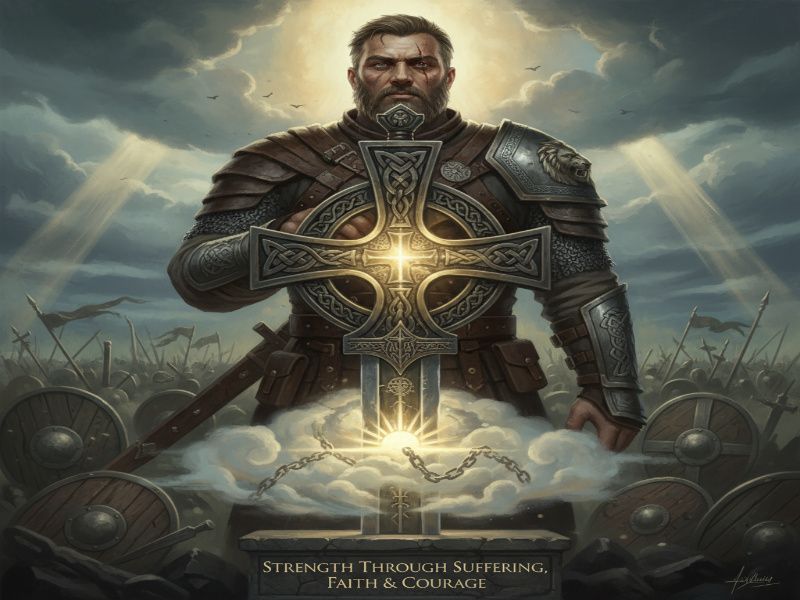
Perhaps most beautifully, the name Tristan symbolizes transformation. It holds both sorrow and strength, both tumult and the courage to face it. This duality mirrors the Christian journey—we experience real hardship, but we’re not defined by it. God transforms our pain into purpose, our mourning into dancing, our weakness into strength made perfect in him.
2 Corinthians 12:9-10 captures this perfectly: “But he said to me, ‘My grace is sufficient for you, for my power is made perfect in weakness.’ Therefore I will boast all the more gladly about my weaknesses, so that Christ’s power may rest on me… For when I am weak, then I am strong.”
That’s the spiritual symbolism of Tristan in a nutshell—weakness transformed into strength, sorrow transformed into joy, tumult transformed into peace. Not through our own power, but through God’s grace working in us.
Tristan and Other Spiritually Meaningful Names
While exploring “Tristan in the Bible” leads us to acknowledge the name’s absence from Scripture, it opens up a broader conversation about how believers choose names. Not every meaningful Christian name needs to be biblical. Let me offer a few comparisons to help contextualize Tristan among other names with deep spiritual significance.
Names from Virtues and Concepts
Many beloved Christian names come from virtues or spiritual concepts rather than biblical characters:
- Grace – Represents God’s unmerited favor, a central Christian doctrine
- Faith – The virtue of trusting in God
- Hope – Confident expectation of God’s promises
- Verity – Truth, another biblical concept
- Prudence – Wisdom in practical matters
Like these names, Tristan represents concepts—endurance, perseverance through sorrow—rather than a specific biblical person.
Names from Saints and Church History
Many Christians choose names from church history rather than directly from the Bible:
- Patrick – Ireland’s patron saint
- Benedict – Founder of Western monasticism
- Francis – The beloved saint of Assisi
- Augustine – Influential theologian and church father
These names honor faithful Christians who came after the biblical era. Similarly, Tristan has been borne by Christians throughout history, giving it a place in the broader Christian tradition.
Names with Complicated Origins
Some popular Christian names have surprisingly non-Christian origins:
- Diana – Originally a Roman goddess, but Christians use it meaning “divine”
- Damian – From a Greek word associated with a fertility cult, but redeemed by Saint Damian
- Christopher – Based on a legend that may not be historical, but means “Christ-bearer”
The point is, Christians have consistently taken names from various sources and infused them with Christian meaning. Tristan fits this pattern perfectly.
Final Thoughts: Finding Meaning Beyond the Pages of Scripture
So we’ve come full circle. We started by asking about “Tristan in the Bible” and discovered that, no, this name doesn’t appear in Scripture. But what we’ve found instead is perhaps more interesting—a name rich with meaning that resonates deeply with biblical themes, a name that has served Christians well for centuries, and a name that can point its bearer toward important spiritual truths.
The absence of Tristan in the Bible doesn’t make it less valuable or less appropriate for Christian families. If anything, it reminds us that God’s truth extends beyond the pages of Scripture—not in contradiction to the Bible, but in harmony with it. The themes of perseverance through hardship, sorrow transformed into joy, and strength forged in the fire of trials—these are thoroughly biblical concepts, even if the specific name Tristan isn’t mentioned.
For parents choosing this name, I’d encourage you to embrace its full meaning. Teach your Tristan about Job’s perseverance, David’s honest lament, Paul’s triumph over suffering. Show them how their name connects to the great story of redemption that runs through all of Scripture. Help them understand that the tumult they’ll inevitably face in life isn’t a curse but an opportunity to demonstrate the transforming power of faith.
For adults bearing the name Tristan, perhaps this exploration has given you a new appreciation for what your name represents. You carry a name that speaks of both struggle and strength, of both sorrow and the courage to face it. Let it remind you that God is faithful in every season, that he draws near to the brokenhearted, and that he will turn your mourning into dancing in his perfect timing.
And for anyone who has made it to the end of this rather long exploration—thank you for sticking with me. I know we could have just stopped after “Tristan in the Bible? Nope, not there,” but there’s so much more to the story. Names matter. They carry weight and meaning. They connect us to history, to faith, to each other.
The name Tristan may not be found in the Bible’s pages, but its spirit—its message of perseverance, transformation, and hope beyond sorrow—is woven throughout Scripture from Genesis to Revelation. And perhaps that’s what makes it such a fitting name for Christians navigating this tumultuous world, trusting in a God who brings beauty from ashes and turns weeping into joy.
Whether you’re considering this name for a child, researching your own name’s significance, or simply curious about the intersection of names and faith, I hope this deep dive into “Tristan in the Bible” has been helpful. The name may not be biblical, but its message certainly is—and that’s what ultimately matters.
If you’re interested in exploring more about spiritual name meanings, the connection between faith and identity, or other names that carry biblical significance, I’d love for you to continue the journey with us. Names are just the beginning of understanding how God shapes our identities and calls us into his purposes.
May you find meaning in your name, purpose in your identity, and hope in the God who knows you by name—whether that name is Tristan or any other. As Jesus said, “I am the good shepherd; I know my sheep and my sheep know me” (John 10:14). He knows you, and that’s what matters most.




More Stories
How to Combine Videos on iPhone
Delete Text Messages on iPhone for Both Sides Not Working
Bluetooth Toggle Missing in Windows 10: what to do