

About Victory Anthem
“Victory Anthem” was officially released on August 22, 2024, as a single that would define both artists’ trajectories in ways they probably couldn’t have predicted. The collaboration brought together Khushi TDT, fresh off her groundbreaking win on Hustle 2.0, and Lashcurry, an artist who’d been steadily building his reputation through authentic storytelling and undeniable skill.
The production came courtesy of Audiocrackerr, whose beat creates this perfect balance—hard-hitting enough to carry the weight of the lyrics, but with enough space to let the words breathe. The instrumental has this interesting quality where it doesn’t overwhelm the vocals, which is crucial for a track where the message is this important. You can hear influences from both American hip-hop and desi sounds, creating something that feels both familiar and fresh.
What’s interesting about this track is how it came together. Both Khushi TDT’s journey from competition winner to established artist and Lashcurry’s rise through consistent dedication to his craft meant they had similar stories to tell, but from different perspectives. The chemistry isn’t forced—it’s the natural result of two artists who understand the grind on a deep level.
The song performed exceptionally well on streaming platforms, racking up millions of views on YouTube within the first few months. Fans particularly connected with the chorus, which became almost a rallying cry. Social media was flooded with people using the victory anthem lyrics as captions, in reels, and in posts about their own struggles and victories. That’s when you know a song has transcended just being music—it becomes part of people’s personal narratives.
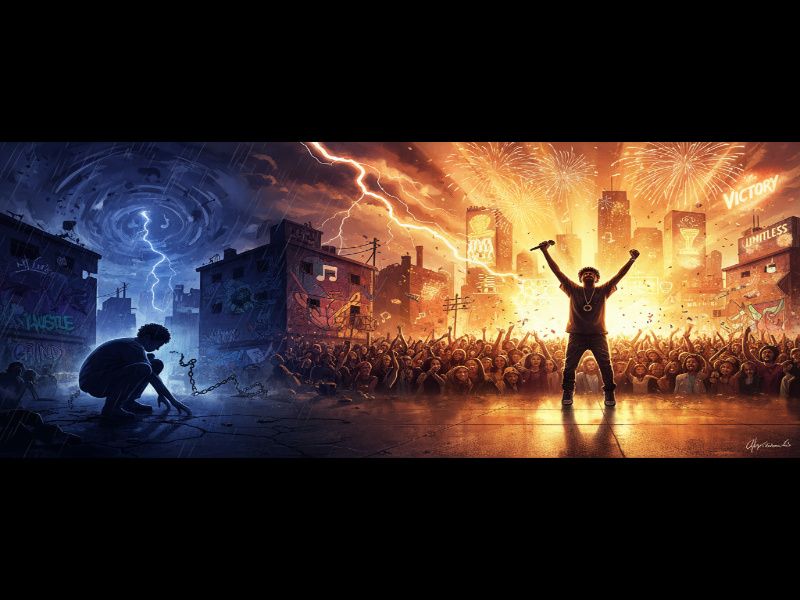
Victory Anthem Lyrics in Hindi/Hinglish
Here are the complete victory anthem lyrics in the original language. The song alternates between Hindi and English (what we call Hinglish in India), which is pretty standard for modern Indian hip-hop. This linguistic blend allows the artists to express themselves in whatever language hits hardest for each particular line or emotion.
Intro
Aye, yo, Audiocrackerr
Chorus: Lash Curry
Badi baat-cheet industry ke logon se
Puri picture bachi hai, abhi promo dekh
Mere kisse sunoge toh ro doge
Lashcurry, Khushi, bakchodi nahin dono se
Bhali baat thi, humein roka tha bahoton ne
Parivaar khush, mujhe tum kya hi rokoge?
Bistar bana denge noton ke, agar mehnat ko paison se tologe
Verse 1: Khushi
Rukegi kalam nahin jab tak hoon zinda
Main marungi tab tak nahin kala hai zinda
Mujhe lagta hai, jaanti sab hoon main
Haar ya jeet ki hoti nahin chinta
Main sunti hoon logon ko zyada nahin
Par haan, main jaanti hoon sabke hoon dil ka
Mere hote padosi ameer
Jo paisa yha baatein banane se milta
Lo, aadat daal, main ruku yeh hoga nahin
Socha nahin kisi ne, karungi sab
Paison se laakhon ka bharungi pet main
Mujhe nahin kamaana bharne ko ghar
Pehle bhi bola hai, maqsad nahin hai mera
Kamaana paisa ya kamaana fame
Fark hai, mujhe badalni hai duniya
Aur tumhein badalne hain ghar
Karne se baatein ho jaati hain taaza
Woh yaad hai ki kaise kara mene shuru tha tab
Koi nahin tha mere saath main rone ko
Aaine mein baitha guru tha, bas
Kehte the log, tere bas ki nahin tha
Mera dil bina nadaan tha, maanta sach
Par kuch nahin aisa, jo tu nahin kar sakti
Ab kehta hai aaina, kehte hain sab
Chorus: Lash Curry
Badi baat-cheet industry ke logon se
Puri picture bachi hai, abhi promo dekh
Mere kisse sunoge toh ro doge
Lashcurry, Khushi, bakchodi nahin dono se
Bhali baat thi, humein roka tha bahoton ne
Parivaar khush, mujhe tum kya hi rokoge?
Bistar bana denge noton ke, agar mehnat ko paison se tologe
Verse 2: Lash Curry
Sangeet ko sab kiya samarpit
Likhe dil se gaane, mere amar geet
Biggie, Pac ko sun gaya safar beet
Meri baatein hain rono mo colorgreet
Meri maa se poochhna mere baare mein
Baap se ladi woh bete ko gaane de
Saath mein khadi main uske sahare se
Toh kaise socha ki tune hum haarenge
Kitni dafa main gira, kitni dafa main utha
Kitni dafa khuda ne mujhe dua mein suna
Kabhi nahin ruka, jhuka nahin, kabhi nahin muda
Kabhi nahin, kisi ke baare mein bola bura main (damn)
Meri aankhon pe patti baandh
Mujhe dekhna nahin, hit karoon abki baat
Hum dono banane chale gaye legacy
Ek beat pe Khush-
Spoken: Raftaar
And the winner of Hustle 2.0 scene Change season one is, Khushi!
Chorus: Lash Curry
Badi baat-cheet industry ke logon se
Puri picture bachi hai, abhi promo dekh
Mere kisse sunoge toh ro doge
Lashcurry, Khushi, bakchodi nahin dono se
Bhali baat thi, humein roka tha bahoton ne
Parivaar khush, mujhe tum kya hi rokoge?
Bistar bana denge noton ke, agar mehnat ko paison se tologe
Victory Anthem Lyrics English Translation
Translation is always tricky, especially with hip-hop where wordplay and cultural references matter so much. Some phrases don’t translate perfectly, and that’s okay—part of the beauty is in the original language. But here’s the English version that captures the essence of what Khushi and Lashcurry are saying.
Intro
Aye, yo, Audiocrackerr
Chorus: Lash Curry
I have big conversations with people in the industry
The full picture is yet to come; for now, watch the promo
You’ll cry if you hear my stories
Lash Curry, Khushi, we don’t just talk nonsense; we deliver
It was good; many people tried to stop us
My family is happy; what can you possibly do to stop me?
We’ll make a bed of money if you measure hard work in cash
Verse 1: Khushi
My art won’t die until I die
I feel like I know everything
I don’t worry about winning or losing
I don’t listen to people much
But yes, I know everyone’s heart
My neighbors became rich because of me
With the money we make from creating stories here
Get used to it; I won’t stop; this won’t happen
No one thought I could do it all
I’ll feed millions with this money
I don’t need to earn to support my family
I’ve said it before; my goal isn’t
To earn money or fame
The difference is, I want to change the world
And you want to change your home
Talking makes things fresh
I remember how I started back then
No one was with me; I was about to cry
The mirror was my only guru
People used to say, “You can’t do it”
My heart was naive too; it believed them
But there’s nothing you can’t do
The mirror says now, everyone says
Chorus: Lash Curry
I have big conversations with people in the industry
The full picture is yet to come; for now, watch the promo
You’ll cry if you hear my stories
Lash Curry, Khushi, we don’t just talk nonsense; we deliver
It was good; many people tried to stop us
My family is happy; what can you possibly do to stop me?
We’ll make a bed of money if you measure hard work in cash
Verse 2: Lash Curry
I dedicated everything to music
I wrote songs from my heart, my immortal songs
My journey passed listening to Biggie and Pac
My words are like Run-D.M.C., a colorful greeting
Ask my mother about me
She fought with my father to let her son sing
I stand with her support
So how did you think we would lose?
How many times I fell, how many times I rose
How many times God heard me in my prayers
I never stopped, never bowed down, never turned away
I never spoke ill of anyone (damn)
Blindfold my eyes
I don’t want to see; I’ll make this one a hit
We both went on to create a legacy
On one beat, Khush-
Spoken: Raftaar
And the winner of Hustle 2.0 scene Change season one is, Khushi!
Chorus: Lash Curry
I have big conversations with people in the industry
The full picture is yet to come; for now, watch the promo
You’ll cry if you hear my stories
Lash Curry, Khushi, we don’t just talk nonsense; we deliver
It was good; many people tried to stop us
My family is happy; what can you possibly do to stop me?
We’ll make a bed of money if you measure hard work in cash
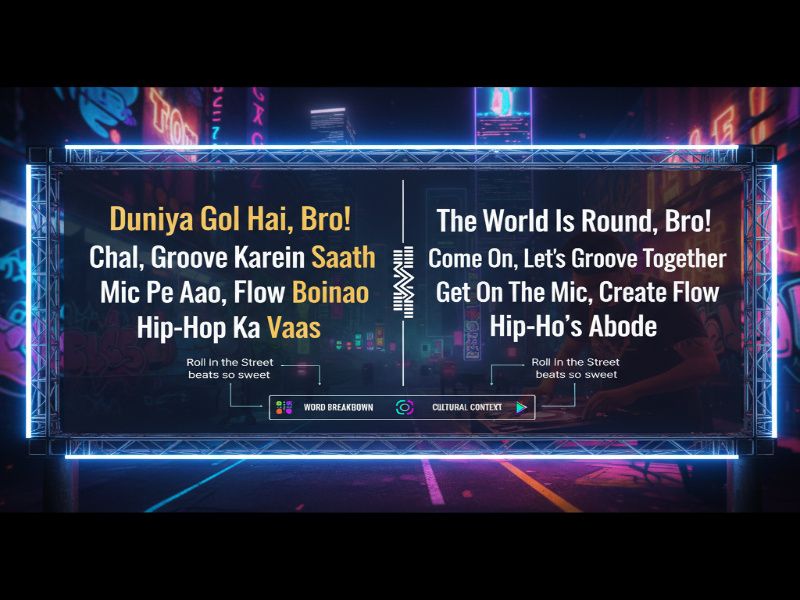
Breaking Down the Meaning Behind Victory Anthem Lyrics
The victory anthem lyrics work on multiple levels, which is what makes them stick with you. On the surface, it’s about two artists celebrating their success and talking about their journey. But dig a little deeper, and you’ll find commentary on the industry, the price of ambition, and what success actually means.
Perseverance and the Grind
The chorus sets the tone immediately—”big conversations with industry people” isn’t bragging. It’s acknowledging that they’re now in rooms they weren’t allowed in before. That line about “the full picture is yet to come” shows confidence, sure, but also patience. They’re saying this is just the beginning, which takes a certain kind of faith when you’re coming from where they came from.
Khushi’s verse is particularly powerful when she talks about her pen not stopping until she dies. There’s this permanence to it, this commitment that goes beyond just wanting to be famous. When she says “my art won’t die until I die,” she’s tying her entire identity to her creative expression. That’s a bold statement, maybe even a little scary when you think about it. But it’s also exactly the kind of all-in mentality that creates great art.
Industry Commentary and Authenticity
The repeated emphasis on not engaging in “bakchodi” (nonsense) is interesting. In an industry that often rewards controversy and drama, both artists are positioning themselves as above that. Whether that’s entirely true is perhaps less important than the intention—they want to be known for their music, not their beef or their social media antics.
Khushi’s line about wanting to “change the world” while others just want to “change their home” might sound a bit idealistic, but it speaks to a generational shift. This isn’t just about making it out of difficult circumstances anymore. There’s a broader ambition at play, a desire to impact culture and society. Whether that’s achievable or not, the ambition itself is worth noting.
Family and Support Systems
Lashcurry’s verse brings in the family element powerfully. His mother fighting with his father to let him pursue music is a story that resonates with so many artists, particularly in cultures where creative careers aren’t always valued or understood. That line—”ask my mother about me”—is both a defense and a tribute. He’s saying his worth isn’t defined by critics or doubters, but by the person who believed in him from the beginning.
The chorus keeps circling back to family happiness as the ultimate measure of success. “My family is happy; what can you possibly do to stop me?” It reframes success from external validation to internal satisfaction. If the people who matter most are proud and taken care of, what else really matters? It’s a perspective that perhaps gets lost sometimes in the pursuit of fame and fortune.
Musical Influences and Legacy
When Lashcurry name-drops Biggie and Pac, he’s not just flexing his hip-hop knowledge. He’s placing himself in a lineage, acknowledging the artists who paved the way while also claiming his spot in that tradition. The reference to Run-D.M.C. as well shows an appreciation for hip-hop history that goes beyond just the most obvious names.
The idea of creating a “legacy” appears explicitly in Lashcurry’s verse. Both artists are thinking long-term, beyond just the next hit or the next paycheck. They’re building something that will outlast them, which is what the best artists do. Whether they achieve that legendary status remains to be seen, but the intention shapes how they approach their craft.
Overcoming Doubt and Self-Belief
Perhaps the most universal theme in the victory anthem lyrics is overcoming doubt—both from others and from within. Khushi’s verse about the mirror being her only guru is vulnerable in a way that hip-hop doesn’t always allow. She’s admitting she was alone, that she doubted herself, that people’s negative words got to her. But then she flips it—now that same mirror, that same self-reflection, shows her what she’s capable of.
The repetition of “how many times I fell, how many times I rose” in Lashcurry’s verse creates this rhythmic emphasis on resilience. It’s not about never falling; it’s about always getting back up. That’s the victory they’re celebrating—not perfection, but persistence.
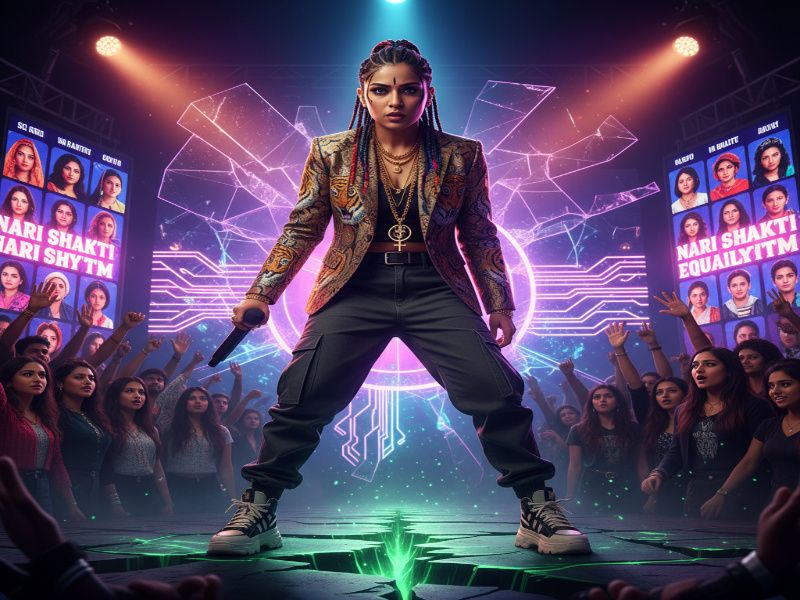
The Artists Behind Victory Anthem
Understanding who created the victory anthem lyrics gives you more context for why the song resonates the way it does. Both Khushi TDT and Lashcurry came to this collaboration with their own unique backgrounds and styles, and that diversity strengthens the track.
Khushi TDT’s Background
Khushi TDT burst onto the scene with her win on MTV Hustle 2.0, India’s premier rap competition show. The moment Raftaar announced her as the winner (which is actually sampled in “Victory Anthem”) marked a turning point not just for her career, but for representation in Indian hip-hop. She became one of the most prominent female voices in a genre that, let’s be honest, has often been male-dominated.
What makes Khushi stand out isn’t just her technical skill—though she’s got bars for days. It’s her perspective. Her earlier tracks like “Sherni” positioned her as a pioneer in Indian female drill, bringing a sound and attitude that was fresh to the scene. Her style is aggressive but not without nuance, confident but with enough vulnerability to keep it real. When she talks about changing the world in the victory anthem lyrics, you believe her because her entire trajectory has been about breaking barriers.
Lashcurry’s Journey
Lashcurry took a different path to recognition. Instead of a competition show breakthrough, he built his audience through consistent releases and collaborations. His tracks like “Oh My God,” “Adbhoot,” and “Sapne” showcased his versatility—he could go hard on trap beats but also get introspective and vulnerable.
What’s interesting about Lashcurry’s contribution to “Victory Anthem” is how his delivery complements Khushi’s without trying to match it. He’s got a different flow, a different energy, but it works because the message aligns. His verse brings in those classic hip-hop influences (Biggie, Pac, Run-D.M.C.) in a way that connects Indian hip-hop to its American roots while still being distinctly desi in its execution.
The Chemistry and Collaboration
What makes this collaboration work is that neither artist is trying to outshine the other. There’s competition in hip-hop, sure, but “Victory Anthem” feels more like a united front. They’re celebrating each other’s success as much as their own. The way the verses and chorus flow together—Lashcurry handles all the chorus duties, giving the track a consistent thread, while both artists get to showcase their individual styles in their verses.
The decision to include the Raftaar announcement from Hustle 2.0 is clever production. It serves as a bridge between Lashcurry’s second verse and the final chorus, but it also grounds the song in a specific moment. It’s saying, “This is where we came from, this is what we overcame.” That kind of storytelling through production choices shows artistic maturity.
Production and Musical Elements
Audiocrackerr’s production on “Victory Anthem” deserves its own recognition. The beat is deceptively simple—a hard-hitting bass line, crisp drums, and minimal melodic elements. But that simplicity is intentional. When your lyrics carry this much weight, you don’t need a cluttered production. The beat provides a foundation without demanding attention, which is harder to pull off than it sounds.
The tempo sits at that perfect pocket where you can nod your head or rap along without it feeling too fast or too slow. There’s enough space in the production for the lyrics to breathe, which is crucial for a track where the words matter this much. You’ll notice in the verses there are moments where the beat strips back even further, putting the focus entirely on what’s being said.
The mix is clean—you can hear every word clearly, which again seems obvious but isn’t always the case in hip-hop production. The balance between Khushi’s and Lashcurry’s vocals is well-handled; neither dominates the sonic space unfairly. The chorus has a slight boost in energy, which makes it hit harder each time it comes back around.
What’s perhaps most impressive is how Audiocrackerr managed to create something that sounds contemporary and current while also having replay value. Some beats get tired after a few listens, but the production on “Victory Anthem” holds up. That’s the mark of quality production—it serves the song without overshadowing it, and it ages well.
Cultural Impact and Reception
The reception to “Victory Anthem” was immediate and enthusiastic. Within days of release, the song was everywhere on Indian social media. Instagram reels, YouTube shorts, Twitter posts—everyone was using these victory anthem lyrics to soundtrack their own stories of overcoming obstacles. That’s when you know a song has transcended just being entertainment; it becomes a tool for self-expression.
The streaming numbers told their own story. Millions of plays across platforms, with particular strength on YouTube where the lyrical video and official audio racked up views quickly. But perhaps more telling than the raw numbers was the engagement. The comments sections were filled with people sharing their own struggles, their own victories, their own moments of doubt and determination. The song created a community, which is what great hip-hop does.
In the broader context of Indian hip-hop’s evolution, “Victory Anthem” represents something important. It shows that the genre has matured to the point where artists can be introspective and motivational without losing their edge. The sound is polished but not sanitized. The message is positive but not preachy. It’s hip-hop that works both as party music and as something you put on when you need to hear that you’re not alone in the struggle.
Critics and fellow artists also gave the track its props. In a scene that can sometimes be competitive to the point of toxicity, “Victory Anthem” got recognized for what it was—a well-executed collaboration that showcased the best of both artists. The fact that it came out of the independent scene rather than a major label also mattered. It showed that Indian artists could create, produce, and market music that competed with anything coming out of more established systems.
Why Victory Anthem Lyrics Resonate
So why do these victory anthem lyrics hit so hard for so many people? I think it comes down to authenticity and relatability. Both Khushi and Lashcurry are talking about real experiences—the doubt, the struggle, the small victories, the support of family, the determination to prove doubters wrong. These aren’t abstract concepts or borrowed narratives. You can hear the lived experience in every line.
The song doesn’t promise easy success or overnight fame. It acknowledges the falls, the times nobody was there, the moments of self-doubt. But it balances that reality with determination and hope. That’s a delicate balance to strike—be honest about the difficulty without being depressing, be confident without being arrogant. Khushi and Lashcurry manage it because they’re speaking from a place of having actually walked that path.
There’s also something powerful about hearing artists explicitly state that their goals go beyond just money or fame. In a culture that often equates success with wealth and luxury, having artists say “I want to change the world, not just change my circumstances” offers an alternative vision. Whether they achieve that world-changing impact remains to be seen, but the ambition itself is inspiring.
The victory anthem lyrics work because they’re specific enough to be authentic but universal enough to be accessible. You don’t have to be a rapper or even a creative to connect with the message. Anyone who’s ever worked hard for something, who’s been told they can’t do it, who’s wanted to make their family proud—that’s the audience for this song, which is basically everyone.
The Legacy and Future
It’s perhaps too early to fully assess the legacy of “Victory Anthem,” but early indications suggest it’s going to be one of those tracks that defines a moment. For Khushi TDT, it solidified her position as a major force in Indian hip-hop beyond just being a competition winner. For Lashcurry, it brought him to a wider audience and showcased his ability to hold his own alongside one of the scene’s brightest stars.
The song has already influenced other artists in the scene. You can hear echoes of its themes and approach in releases that came after it. That’s cultural impact—when other artists start responding to or building on what you’ve created, you know you’ve contributed something meaningful to the conversation.
Looking forward, “Victory Anthem” sets a high bar for both artists. When you create something this well-received, there’s pressure to match or exceed it. But if the song’s message about persistence and dedication is genuine—and I believe it is—then both Khushi and Lashcurry have the mindset to continue evolving and creating impactful music.
The track also raises interesting questions about collaboration in Indian hip-hop. If two artists with different styles and backgrounds can come together and create something this cohesive and powerful, what else is possible? The genre has sometimes been criticized for unnecessary beef and competition, but “Victory Anthem” shows the potential of artists supporting and elevating each other instead.
Final Thoughts
The victory anthem lyrics capture something essential about the human experience—the struggle, the doubt, the perseverance, and ultimately, the triumph. Whether you’re listening for the first time or the hundredth, there’s something in these words that resonates. Maybe it’s Khushi’s fierce determination. Maybe it’s Lashcurry’s acknowledgment of his mother’s sacrifice. Maybe it’s just the beat and the energy and the way it makes you want to tackle whatever mountain you’re facing.
Hip-hop at its best tells stories that need telling and amplifies voices that deserve hearing. “Victory Anthem” does both. It’s a celebration, but it’s also a reminder that those celebrations are earned through struggle and supported by community. As Indian hip-hop continues to grow and evolve, tracks like this one serve as markers—this is where we were, this is what we achieved, this is what’s possible.
If you haven’t listened to the full track yet, do yourself a favor and pull it up on your preferred streaming platform. Read along with these victory anthem lyrics, pay attention to the delivery, the flow, the emotion behind the words. And if you’re working toward your own victory, whatever that looks like, maybe let this be your anthem too. Because that’s the thing about good music—it meets you where you are and pushes you toward where you want to be.
For more on the artists behind this powerful track, check out our detailed profiles on Khushi TDT’s journey and discography and Lashcurry’s musical evolution. And to understand how this song fits into the broader picture, dive into our comprehensive look at the Indian hip-hop scene and its evolution.




More Stories
How to Combine Videos on iPhone
Delete Text Messages on iPhone for Both Sides Not Working
Bluetooth Toggle Missing in Windows 10: what to do