

Before the match: a quick scene‑setter
Picture two people on different tracks that happened to run parallel for a while. He was a morning rock DJ in Delaware—early alarms, tight paychecks, not exactly glamour. She was in Maryland, finishing her degree, practical about money and time, and (from the way he tells it) good at keeping conversations honest and focused.
There’s something modest about that setup. No whirlwind narrative, no contrived twists. Perhaps that’s why it reads as credible. Two people, both busy, both aware of their limits, trying to see whether the answers match the questions they actually had, not just the ones that sound good in a story.
The first contact: eHarmony as a filter, not a fairy godmother
Plenty of dating platforms promise serendipity. This one didn’t need magic. The first match turned into a real conversation, then a few more, and then a plan: meet in person without turning the moment into a performance.
If you’ve been there, you know the feeling. You’re cautious and hopeful at the same time. Maybe you overprepare. Maybe you underprepare. And then you just go—because the only way to answer a real question is to show up and see.
That first date: a two‑and‑a‑half‑hour drive and a simple dinner
He drove two and a half hours to Maryland, picked her up, and took her to dinner in Baltimore. That detail tends to stick, not because it’s grand but because it’s ordinary and obviously costly in the ways early relationships are costly—time, gas, tolls, energy.
Two hours into the conversation, by his telling, the point wasn’t fireworks; it was clarity. Perhaps that’s more useful anyway. Chemistry fades if it doesn’t find something sturdier to lean on.
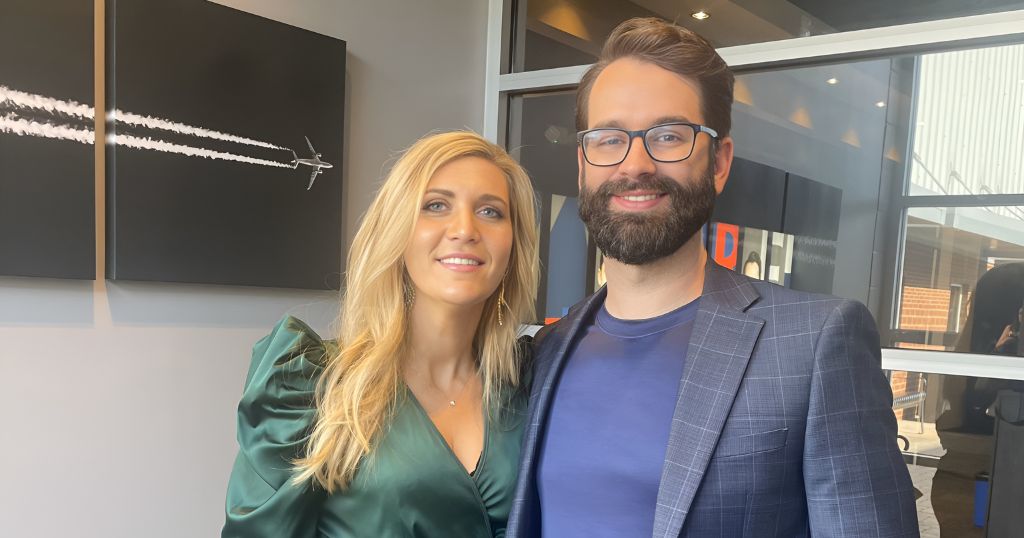
What long‑distance really felt like
Over the next year and a half, there were weekly drives, sometimes roundtrips that made no financial sense, sometimes quick half‑way meetups—practical compromises, not rom‑com set pieces. He’d try to catch a few hours of sleep in a guest room and then head back for an early show. Tired, broke, determined. The trifecta that defines lots of twenty‑something commitments that don’t photograph well but age nicely.
She drove too. When gas hurt the budget, they split the distance. The point is less about who did what and more about a pattern: they kept showing up at a cost. That’s not especially poetic, but it’s the kind of data that predicts long‑term outcomes better than high notes do.
Deciding to marry: quick, careful, both
This is where recollections tend to diverge in tone depending on who’s telling the story. Some people hear “fast” and translate it as “reckless.” Others hear “quick” and think “decisive.” The way they frame it feels closer to the second option—intentional moves with fewer theatrics, more follow‑through.
If you prefer the language of compatibility, you might say their constraints forced them to test the boring parts early: calendars, money, tolerance for fatigue, willingness to go first when going first is hard. Maybe that’s not romantic. It is, however, predictive.
Values, daily reality, and what they chose not to publicize
By habit and principle, both seemed comfortable keeping private details private. You can call that old‑fashioned, or just call it prudent. Either way, decisions about what not to share tend to keep the signal‑to‑noise ratio clean, which is helpful when one spouse is very online by profession.
If you’re curious about public footprints—what shows up on Instagram, how a credit appears without snowballing into a persona—there’s a deeper dive here: Alissa Ann Linnemann online presence and public appearances. It’s a limited footprint by design, which is the point.
About the name you’ll see in different places
You’ll encounter both “Alissa Ann Linnemann” (maiden) and “Alissa Walsh” (married). That can confuse casual readers who skim fast and assume there are two people. There aren’t. It’s one person referenced in two ways, which is common enough, though it can generate messes in low‑quality write‑ups.
If you want a simple explainer to keep handy, here’s a clean breakdown: Alissa Ann Linnemann vs. Dr. Alissa Walsh (identity clarification). It’s a quick read that saves a lot of confusion later.
Money, distance, fatigue: the unglamorous predictors
It’s easy to underestimate how much practical constraints do the sorting for us. If a relationship survives the budget stress and errand‑level coordination of a year and a half of weekly travel, it likely has a chance in harder weather. That’s not a guarantee, just a good early proxy.
There’s also something to be said for gravity. You keep walking toward what you value. They did, repeatedly. It isn’t mystical, but it’s how most durable things are made—incrementally, with priorities that are proven rather than announced.
What changed after the wedding
The wedding year—2011—becomes a tidy anchor for the timeline. Life got fuller. The family grew. Details remained intentionally light in public, which can be frustrating for readers who love their biographies densely footnoted, yet entirely consistent with the boundaries set at the beginning.
If you need the broad, well‑sourced snapshot—names, family size, the way public mentions align—this full bio of Alissa Ann Linnemann is the best single place to start and finish.
Why this origin story resonates (quietly)
Some stories work because they’re modest. This one doesn’t sell itself; it doesn’t need to. Perhaps that’s why it feels believable years later. Two people met online, did the long work of meeting in person, and built something ordinary that stayed ordinary while becoming important.
Maybe that’s the whole point. Not everything meaningful has to be cinematic. Sometimes you just keep the car gassed and the calendar open.




More Stories
How to Combine Videos on iPhone
Delete Text Messages on iPhone for Both Sides Not Working
Bluetooth Toggle Missing in Windows 10: what to do